
- Home
- Agatha Christie
Sleeping Murder mm-14 Page 9
Sleeping Murder mm-14 Read online
Page 9
‘Only she couldn’t go on and marry Walter Fane,’ said Gwenda. ‘So she wired her brother and went home. Yes, that all fits. And on the boat home, she met my father…’
She paused, thinking it out.
‘Not wildly in love,’ she said. ‘But attracted…and then there was me. They were both unhappy…and they consoled each other. My father told her about my mother, and perhaps she told him about the other man…Yes-of course-’ She flicked over the pages of the diary.
‘I knew there was someone-she said as much to me on the boat-someone she loved and couldn’t marry.
Yes-that’s it. Helen and my father felt they were alike-and there was me to be looked after, and she thought she could make him happy-and she even thought, perhaps, that she’d be quite happy herself in the end.’
She stopped, nodded violently at Miss Marple, and said brightly: ‘That’s it.’
Giles was looking exasperated.
‘Really, Gwenda, you make a whole lot of things up and pretend that they actually happened.’
‘They did happen. They must have happened. And that gives us a third person for X.’
‘You mean-?’
‘The married man. We don’t know what he was like. He mayn’t have been nice at all. He may have been a little mad. He may have followed her here-’
‘You’ve just placed him as going out to India.’
‘Well, people can come back from India, can’t they? Walter Fane did. It was nearly a year later. I don’t say this man did come back, but I say he’s a possibility. You keep harping on who the men were in her life. Well, we’ve got three of them. Walter Fane, and some young man whose name we don’t know, and a married man-’
‘Whom we don’t know exists,’ finished Giles.
‘We’ll find out,’ said Gwenda. ‘Won’t we, Miss Marple?’
‘With time and patience,’ said Miss Marple, ‘we may find out a great deal. Now for my contribution. As a result of a very fortunate little conversation in the draper’s today, I have discovered that Edith Pagett who was cook at St Catherine’s at the time we are interested in, is still in Dillmouth. Her sister is married to a confectioner here. I think it would be quite natural, Gwenda, for you to want to see her. She may be able to tell us a good deal.’
‘That’s wonderful,’ said Gwenda. ‘I’ve thought of something else,’ she added. ‘I’m going to make a new will. Don’t look so grave, Giles, I shall still leave my money to you. But I shall get Walter Fane to do it for me.’
‘Gwenda,’ said Giles. ‘Do be careful.’
‘Making a will,’ said Gwenda, ‘is a most natural thing to do. And the line of approach I’ve thought up is quite good. Anyway, I want to see him. I want to see what he’s like, and if I think that possibly-’
She left the sentence unfinished.
‘What surprises me,’ said Giles, ‘is that no one else answered that advertisement of ours-this Edith Pagett, for example-’
Miss Marple shook her head.
‘People take a long time to make up their minds about a thing like that in these country districts,’ she said. ‘They’re suspicious. They like to think things over.’
Chapter 12. Lily Kimble
Lily Kimble spread a couple of old newspapers on the kitchen table in readiness for draining the chipped potatoes which were hissing in the pan. Humming tunelessly a popular melody of the day she leaned forward aimlessly studying the newsprint spread out before her.
Then suddenly she stopped humming and called: ‘Jim-Jim. Listen here, will you?’
Jim Kimble, an elderly man of few words, was washing at the scullery sink. To answer his wife, he used his favourite monosyllable.
‘Ar?’ said Jim Kimble.
‘It’s a piece in the paper. Will anyone with any knowledge of Helen Spenlove Halliday, nee Kennedy, communicate with Messrs Reed and Hardy, Southampton Row! Seems to me they might be meaning Mrs Halliday as I was in service with at St Catherine’s. Took it from Mrs Findeyson, they did, she and’er’usband. Her name was Helen right enough-Yes, and she was sister to Dr Kennedy, him as always said I ought to have had my adenoids out.’
There was a momentary pause as Mrs Kimble adjusted the frying chips with an expert touch. Jim Kimble was snorting into the roller towel as he dried his face.
‘Course, it’s an old paper, this,’ resumed Mrs Kimble. She studied its date. ‘Nigh on a week or more old. Wonder what it’s all about? Think as there’s any money in it, Jim?’
Mr Kimble said, ‘Ar,’ noncommittally.
‘Might be a will or something,’ speculated his wife. ‘Powerful lot of time ago.’
‘Ar.’
‘Eighteen years or more, I shouldn’t wonder…Wonder what they’re raking it all up for now? You don’t think it could be police, do you, Jim?
‘Whatever?’ asked Mr Kimble.
‘Well, you know what I always thought,’ said Mrs Kimble mysteriously. ‘Told you at the time, I did, when we was walking out. Pretending that she’d gone off with a feller. That’s what they say, husbands, when they do their wives in. Depend upon it, it was murder. That’s what I said to you and what I said to Edie, but Edie she wouldn’t have it at any price. Never no imagination, Edie hadn’t. Those clothes she was supposed to have took away with her-well, they weren’t right, if you know what I mean. There was a suitcase gone and a bag, and enough clothes to fill ’em, but they wasn’t right, those clothes. And that’s when I said to Edie, “Depend upon it,” I said, “the master’s murdered her and put her in the cellar.” Only not really the cellar, because that Layonee, the Swiss nurse, she saw something. Out of the window. Come to the cinema along of me, she did, though she wasn’t supposed to leave the nursery-but there, I said, the child never wakes up-good as gold she was, always, in her bed at night. “And madam never comes up to the nursery in the evening,” I says. “Nobody will know if you slip out with me.” So she did. And when we got in there was ever such a schemozzle going on. Doctor was there and the master ill and sleeping in the dressing-room, and the doctor looking after him, and it was then he asked me about the clothes, and it seemed all right at the time. I thought she’d gone off all right with that fellow she was so keen on-and him a married man, too-and Edie said she did hope and pray we wouldn’t be mixed up in any divorce case. What was his name now? I can’t remember. Began with an M-or was it an R? Bless us, your memory does go.’
Mr Kimble came in from the scullery and ignoring all matters of lesser moment demanded if his supper was ready.
‘I’ll just drain the chips…Wait, I’ll get another paper. Better keep this one. ’Twouldn’t be likely to be police-not after all this time. Maybe it’s lawyers-and money in it. It doesn’tsay something to your advantage…but it might be all the same…Wish I knew who I could ask about it. It says write to some address in London-but I’m not sure I’d like to do a thing like that…not to a lot of people in London…What do you say, Jim?’
‘Ar,’ said Mr Kimble, hungrily eyeing the fish and chips.
The discussion was postponed.
Chapter 13. Walter Fane
Gwenda looked across the broad mahogany desk at Mr Walter Fane.
She saw a rather tired-looking man of about fifty, with a gentle, nondescript face. The sort of man, Gwenda thought, that you would find it a little difficult to recollect if you had just met him casually…A man who, in modern phrase, lacked personality. His voice, when he spoke, was slow and careful and pleasant. Probably, Gwenda decided, a very sound lawyer.
She stole a glance round the office-the office of the senior partner of the firm. It suited Walter Fane, she decided. It was definitely old-fashioned, the furniture was shabby, but was made of good solid Victorian material. There were deed boxes piled up against the walls-boxes with respectable County names on them. Sir John Vavasour-Trench. Lady Jessup. Arthur ffoulkes, Esq. Deceased.
The big sash windows, the panes of which were rather dirty, looked into a square backyard flanked by the solid walls of a seventee
nth-century adjoining house. There was nothing smart or up to date anywhere, but there was nothing sordid either. It was superficially an untidy office with its piled-up boxes, and its littered desk, and its row of law books leaning crookedly on a shelf-but it was actually the office of someone who knew exactly where to lay his hand upon anything he wanted.
The scratching of Walter Fane’s pen ceased. He smiled his slow, pleasant smile.
‘I think that’s all quite clear, Mrs Reed,’ he said. ‘A very simple will. When would you like to come in and sign it?’
Gwenda said whenever he liked. There was no particular hurry.
‘We’ve got a house down here, you know,’ she said. ‘Hillside.’
Walter Fane said, glancing down at his notes, ‘Yes, you gave me the address…’
There was no change in the even tenor of his voice.
‘It’s a very nice house,’ said Gwenda. ‘We love it.’
‘Indeed?’ Walter Fane smiled. ‘Is it on the sea?’
‘No,’ said Gwenda. ‘I believe the name has been changed. It used to be St Catherine’s.’
Mr Fane took off his pince-nez. He polished them with a silk handkerchief, looking down at the desk.
‘Oh yes,’ he said. ‘On the Leahampton road?’
He looked up and Gwenda thought how different people who habitually wear glasses look without them. His eyes, a very pale grey, seemed strangely weak and unfocussed.
It makes his whole face look, thought Gwenda, as though he isn’t really there.
Walter Fane put on the pince-nez again. He said in his precise lawyer’s voice, ‘I think you said you did make a will on the occasion of your marriage?’
‘Yes. But I’d left things in it to various relatives in New Zealand who have died since, so I thought it would be simpler really to make a new one altogether-especially as we mean to live permanently in this country.’
Walter Fane nodded.
‘Yes, quite a sound view to take. Well, I think this is all quite clear, Mrs Reed. Perhaps if you come in the day after tomorrow? Will eleven o’clock suit you?’
‘Yes, that will be quite all right.’
Gwenda rose to her feet and Walter Fane rose also.
Gwenda said, with exactly the little rush she had rehearsed beforehand, ‘I-I asked specially for you, because I think-I mean I believe-that you once knew my-my mother.’
‘Indeed?’ Walter Fane put a little additional social warmth into his manner. ‘What was her name?’
‘Halliday. Megan Halliday. I think-I’ve been told-that you were once engaged to her?’
A clock on the wall ticked. One, two, one two, one two.
Gwenda suddenly felt her heart beating a little faster. What a very quiet face Walter Fane had. You might see a house like that-a house with all the blinds pulled down. That would mean a house with a dead body in it. (What idiotic thoughts you do have, Gwenda!)
Walter Fane, his voice unchanged, unruffled, said, ‘No, I never knew your mother, Mrs Reed. But I was once engaged, for a short period, to Helen Kennedy who afterwards married Major Halliday as his second wife.’
‘Oh, I see. How stupid of me. I’ve got it all wrong. It was Helen-my stepmother. Of course it’s all long before I remember. I was only a child when my father’s second marriage broke up. But I heard someone say that you’d once been engaged to Mrs Halliday in India-and I thought of course it was my own mother-because of India, I mean…My father met her in India.’
‘Helen Kennedy came out to India to marry me,’ said Walter Fane. ‘Then she changed her mind. On the boat going home she met your father.’
It was a plain unemotional statement of fact. Gwenda still had the impression of a house with the blinds down.
‘I’m so sorry,’ she said. ‘Have I put my foot in it?’
Walter Fane smiled-his slow, pleasant smile. The blinds were up.
‘It’s nineteen or twenty years ago, Mrs Reed,’ he said. ‘One’s youthful troubles and follies don’t mean much after that space of time. So you are Halliday’s baby daughter. You know, don’t you, that your father and Helen actually lived here in Dillmouth for a while?’
‘Oh yes,’ said Gwenda, ‘that’s really why we came here. I didn’t remember it properly, of course, but when we had to decide where we’d live in England, I came to Dillmouth first of all, to see what it was really like, and I thought it was such an attractive place that I decided that we’d park ourselves right here and nowhere else. And wasn’t it luck? We’ve actually got the same house that my people lived in long ago.’
‘I remember the house,’ said Walter Fane. Again he gave that slow, pleasant smile. ‘You may not remember me, Mrs Reed, but I rather imagine I used to give you piggybacks once.’
Gwenda laughed.
‘Did you really? Then you’re quite an old friend, aren’t you? I can’t pretend I remember you-but then I was only about two and a half or three, I suppose…Were you back on leave from India or something like that?’
‘No, I’d chucked India for good. I went out to try tea-planting-but the life didn’t suit me. I was cut out to follow in my father’s footsteps and be a prosy unadventurous country solicitor. I’d passed all my law exams earlier, so I simply came back and went straight into the firm.’ He paused and said, ‘I’ve been here ever since.’
Again there was a pause and he repeated in a lower voice, ‘Yes-ever since…’
But eighteen years, thought Gwenda, isn’t really such a long time as all that…
Then, with a change of manner, he shook hands with her and said, ‘Since we seem to be old friends, you really must bring your husband to tea with my mother one day. I’ll get her to write to you. In the meanwhile, eleven o’clock on Thursday?’
Gwenda went out of the office and down the stairs. There was a cobweb in the angle of the stairway. In the middle of the web was a pale, rather nondescript spider. It didn’t look, Gwenda thought, like a real spider. Not the fat juicy kind of spider who caught flies and ate them. It was more like a ghost of a spider. Rather like Walter Fane, in fact.
***
Giles met his wife on the seafront.
‘Well?’ he asked.
‘He was here in Dillmouth at the time,’ said Gwenda. ‘Back from India, I mean. Because he gave me piggybacks. But he couldn’t have murdered anyone-not possibly. He’s much too quiet and gentle. Very nice, really, but the kind of person you never really notice. You know, they come to parties, but you never notice when they leave. I should think he was frightfully upright and all that, and devoted to his mother, and with a lot of virtues. But from a woman’s point of view, terribly dull. I can see why he didn’t cut any ice with Helen. You know, a nice safe person to marry-but you don’t really want to.’
‘Poor devil,’ said Giles. ‘And I suppose he was just crazy about her.’
‘Oh, I don’t know…I shouldn’t think so, really. Anyway, I’m sure he wouldn’t be our malevolent murderer. He’s not my idea of a murderer at all.’
‘You don’t really know a lot about murderers, though, do you, my sweet?’
‘What do you mean?’
‘Well-I was thinking about quiet Lizzie Borden-only the jury said she didn’t do it. And Wallace, a quiet man whom the jury insisted did kill his wife, though the sentence was quashed on appeal. And Armstrong who everybody said for years was such a kind unassuming fellow. I don’t believe murderers are ever a special type.’
‘I really can’t believe that Walter Fane-’
Gwenda stopped.
‘What is it?’
‘Nothing.’
But she was remembering Walter Fane polishing his eyeglasses and the queer blind stare of his eyes when she had first mentioned St Catherine’s.
‘Perhaps,’ she said uncertainly, ‘he was crazy about her…’
Chapter 14. Edith Pagett
Mrs Mountford’s back parlour was a comfortable room. It had a round table covered with a cloth, and some old-fashioned armchairs and a stern-looking but
unexpectedly well-sprung sofa against the wall. There were china dogs and other ornaments on the mantelpiece, and a framed coloured representation of the Princess Elizabeth and Margaret Rose. On another wall was the King in Naval uniform, and a photograph of Mr Mountford in a group of other bakers and confectioners. There was a picture made with shells and a watercolour of a very green sea at Capri. There were a great many other things, none of them with any pretensions to beauty or the higher life; but the net result was a happy, cheerful room where people sat round and enjoyed themselves whenever there was time to do so.
Mrs Mountford, nee Pagett, was short and round and dark-haired with a few grey streaks in the dark. Her sister, Edith Pagett, was tall and dark and thin. There was hardly any grey in her hair though she was at a guess round about fifty.
‘Fancy now,’ Edith Pagett was saying. ‘Little Miss Gwennie. You must excuse me, m’am, speaking like that, but it does take one back. You used to come into my kitchen, as pretty as could be. “Winnies,” you used to say. “Winnies.” And what you meant was raisins-though why you called them winnies is more than I can say. But raisins was what you meant and raisins it was I used to give you, sultanas, that is, on account of the stones.’
Gwenda stared hard at the upright figure and the red cheeks and black eyes, trying to remember-to remember-but nothing came. Memory was an inconvenient thing.
‘I wish I could remember-’ she began.
‘It’s not likely that you would. Just a tiny little mite, that’s all you were. Nowadays nobody seems to want to go in a house where there’s children. I can’t see it, myself. Children give life to a house, that’s what I feel. Though nursery meals are always liable to cause a bit of trouble. But if you know what I mean, m’am, that’s the nurse’s fault, not the child’s. Nurses are nearly always difficult-trays and waiting upon and one thing and another. Do you remember Layonee at all, Miss Gwennie? Excuse me, Mrs Reed, I should say.’
 Murder in the Mews
 Postern of Fate
 The Regatta Mystery and Other Stories
 Sad Cypress
 Why Didn't They Ask Evans?
 After the Funeral
 And Then There Were None
 The Witness for the Prosecution
 Murder on the Orient Express
 The Seven Dials Mystery
 Hercule Poirot: The Complete Short Stories
 The Mysterious Affair at Styles
 Sleeping Murder
 Hickory Dickory Dock
 The Moving Finger
 The Mirror Crack'd From Side to Side
 Ordeal by Innocence
 Mrs. McGinty's Dead
 Problem at Pollensa Bay and Other Stories
 Death Comes as the End
 Endless Night
 Parker Pyne Investigates
 Poirot's Early Cases: 18 Hercule Poirot Mysteries
 Murder Is Easy
 An Autobiography
 One, Two, Buckle My Shoe
 A Pocket Full of Rye
 The Mysterious Mr. Quin
 The Mystery of the Blue Train
 Hercule Poirot's Christmas: A Hercule Poirot Mystery
 Cards on the Table (SB)
 Three Act Tragedy
 The Secret Adversary
 The Body in the Library
 The Pale Horse
 While the Light Lasts
 The Golden Ball and Other Stories
 Double Sin and Other Stories
 The Secret of Chimneys
 Five Little Pigs
 Murder in Mesopotamia: A Hercule Poirot Mystery
 The Mousetrap and Other Plays
 Lord Edgware Dies
 The Hound of Death
 The Murder on the Links
 A Caribbean Mystery
 Peril at End House: A Hercule Poirot Mystery
 The Thirteen Problems
 By the Pricking of My Thumbs
 Mrs McGinty's Dead / the Labours of Hercules (Agatha Christie Collected Works)
 Appointment With Death
 Murder Is Announced
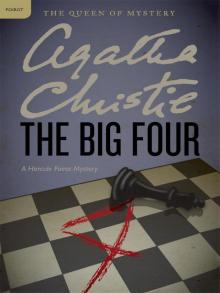 The Big Four
 Three Blind Mice and Other Stories
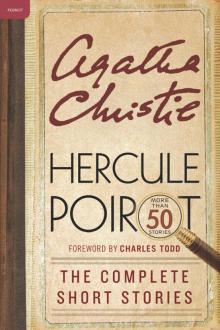 Hercule Poirot- the Complete Short Stories
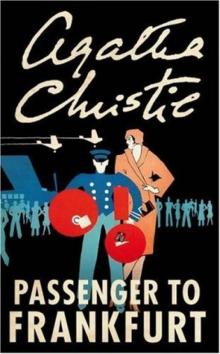 Passenger to Frankfurt
 They Do It With Mirrors
 Poirot Investigates
 The Coming of Mr. Quin: A Short Story
 4:50 From Paddington
 The Last Seance
 Dead Man's Folly
 The Adventure of the Christmas Pudding
 The A.B.C. Murders
 Death in the Clouds
 Towards Zero
 The Listerdale Mystery and Eleven Other Stories
 Hallowe'en Party
 Murder at the Vicarage
 Cards on the Table
 Death on the Nile
 Curtain
 Partners in Crime
 The Listerdale Mystery / the Clocks (Agatha Christie Collected Works)
 Taken at the Flood
 Dumb Witness
 The Complete Tommy and Tuppence
 Problem at Pollensa Bay
 Cat Among the Pigeons
 At Bertram's Hotel
 Nemesis
 Miss Marple's Final Cases
 The Hollow
 Midwinter Murder
 They Came to Baghdad
 Third Girl
 Destination Unknown
 Hercule Poirot and the Greenshore Folly
 Postern of Fate tat-5
 Midsummer Mysteries
 Poirot's Early Cases hp-38
 Sparkling Cyanide
 Star over Bethlehem
 Black Coffee hp-7
 Hercule Poirot's Casebook (hercule poirot)
 Murder in Mesopotamia hp-14
 A Pocket Full of Rye: A Miss Marple Mystery (Miss Marple Mysteries)
 The Listerdale Mystery
 The Complete Tommy & Tuppence Collection
 Lord Edgware Dies hp-8
 Death in the Clouds hp-12
 Short Stories
 Third Girl hp-37
 Why Didn't They Ask Evans
 Adventure of the Christmas Pudding and other stories
 Cards on the Table hp-15
 The Mystery of the Blue Train hp-6
 After the Funeral hp-29
 Poirot Investigates hp-3
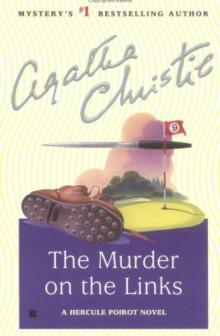 Murder on the Links hp-2
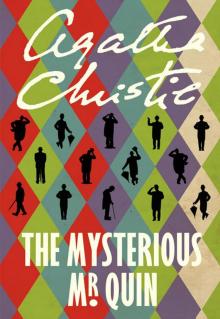 The Mysterious Mr Quin
 Curtain hp-39
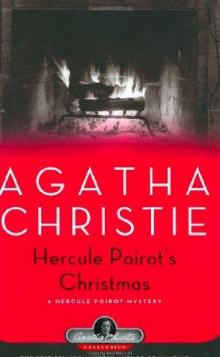 Hercule Poirot's Christmas hp-19
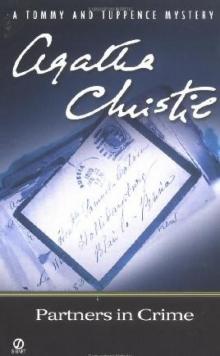 Partners in Crime tat-2
 The Clocks hp-36
 Murder, She Said
 The Clocks
 The Hollow hp-24
 Appointment with Death hp-21
 Murder in the mews hp-18
 The Murder Of Roger Ackroyd hp-4
 Dumb Witness hp-16
 The Sittaford Mystery
 Mrs McGinty's Dead
 Evil Under the Sun
 The A.B.C. Murders hp-12
 The Murder at the Vicarage mm-1
 The Body in the Library mm-3
 Miss Marple and Mystery
 Sleeping Murder mm-14
 By the Pricking of My Thumbs tat-4
 A Pocket Full of Rye mm-7
 Hickory Dickory Dock: A Hercule Poirot Mystery
 The Big Four hp-5
 The Labours of Hercules hp-26
 The Complete Miss Marple Collection
 The Labours of Hercules
 4.50 From Paddington
 A Murder Is Announced mm-5
 Agahta Christie: An autobiography
 Hallowe'en Party hp-36
 Black Coffee
 The Mysterious Affair at Styles hp-1
 Three-Act Tragedy
 Best detective short stories
 Three Blind Mice
 Nemesis mm-11
 The Mirror Crack'd from Side to Side mm-8
 The ABC Murders
 Poirot's Early Cases
 The Unexpected Guest
 A Caribbean Mystery - Miss Marple 09
 The Murder of Roger Ackroyd
 Elephants Can Remember hp-39
 The Mirror Crack'd: from Side to Side
 Sad Cypress hp-21
 Peril at End House
 Elephants Can Remember
 Best detective stories of Agatha Christie
 Hercule Poirot's Christmas
 The Body In The Library - Miss Marple 02
 Evil Under the Sun hp-25
 The Capture of Cerberus
 The Hound of Death and Other Stories
 The Thirteen Problems (miss marple)
 The Thirteen Problems-The Tuesday Night Club
 Spider's Web
 At Bertram's Hotel mm-12
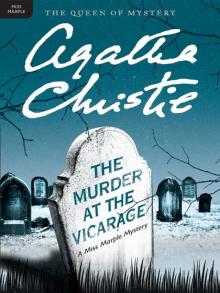 The Murder at the Vicarage (Agatha Christie Mysteries Collection)
 A Caribbean Mystery (miss marple)
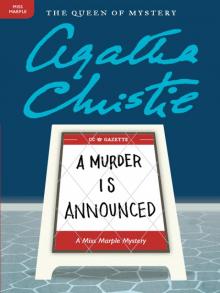 A Murder Is Announced
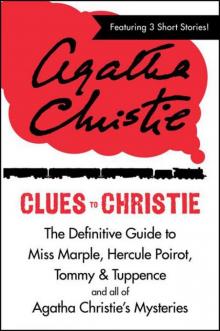 Clues to Christie
 The Moving Finger mm-3
 The Harlequin Tea Set and Other Stories
 Murder on the Links
 The Murder at the Vicarage
 N or M tat-3
 The Secret Adversary tat-1
 The Burden
 Mrs McGinty's Dead hp-28
 Dead Man's Folly hp-31
 Peril at End House hp-8
 Complete Short Stories Of Miss Marple mm-16
 Curtain: Poirot's Last Case
 The Man in the Brown Suit
 They Do It With Mirrors mm-6