
- Home
- Agatha Christie
Elephants Can Remember hp-39
Elephants Can Remember hp-39 Read online
Elephants Can Remember
( Hercule Poirot - 39 )
Agatha Christie
Agatha Christie
Elephants Can Remember
Chapter I. A Literary Luncheon
Mrs. Oliver looked at herself in the glass. She gave a brief, sideways look towards the clock on the mantelpiece, which she had some idea was twenty minutes slow. Then she resumed her study of her coiffure. The trouble with Mrs. Oliver was-and she admitted it freely-that her styles of hairdressing were always being changed. She had tried almost everything in turn. A severe pompadour at one time, then a wind-swept style where you brushed back your locks to display an intellectual brow, at least she hoped the brow was intellectual. She had tried tightly arranged curls, she had tried a kind of artistic disarray. She had to admit that it did not matter very much today what her type of hairdressing was, because today she was going to do what she very seldom did-wear a hat.
On the top shelf of Mrs. Oliver's wardrobe there reposed four hats. One was definitely allotted to weddings. When you went to a wedding, a hat was a "must." But even then Mrs. Oliver kept two. One, in a round bandbox, was of feathers. It fitted closely to the head and stood up very well to sudden squalls of rain if they should overtake one unexpectedly as one passed from a car to the interior of the sacred edifice, or as so often nowadays, a registrar's office.
The other, and more elaborate, hat was definitely for attending a wedding held on a Saturday afternoon in summer. It had flowers and chiffon and a covering of yellow net attached with mimosa. The other two hats on the shelf were of a more all-purpose character. One was what Mrs. Oliver called her country house hat, made of tan felt suitable for wearing with tweeds of almost any pattern, with a becoming brim that you could turn up or turn down.
Mrs. Oliver had a cashmere pullover for warmth and a thin pullover for hot days, either of which was suitable in color to go with this. However, though the pullovers were frequently worn, the hat was practically never worn. Because, really, why put on a hat just to go to the country and have a meal with your friends?
The fourth hat was the most expensive of the lot and it had extraordinary advantages about it. Possibly, Mrs. Oliver sometimes thought, because it was so expensive. It consisted of a kind of turban of various layers of contrasting velvets, all of rather becoming pastel shades which would go with anything.
Mrs. Oliver paused in doubt and then called for assistance.
"Maria," she said, then louder, "Maria, Come here a minute." Maria came. She was used to being asked to give advice on what Mrs. Oliver was thinking of wearing.
"Going to wear your lovely smart hat, are you?" said Maria.
"Yes," said Mrs. Oliver. "I wanted to know whether you think it looks best this way or the other way round." Maria stood back and took a look.
"Well, that's back to front you're wearing it now, isn't it?"
"Yes, I know," said Mrs. Oliver. "I know that quite well. But I thought somehow it looked better that way."
"Oh, why should it?" said Maria.
"Well, it's meant, I suppose. But it's got to be meant by me as well as the shop that sold it," said Mrs. Oliver.
"Why do you think it's better the wrong way round?"
"Because you get that lovely shade of blue and the dark brown, and I think that looks better than the other way, which is green with the red and the chocolate color." At this point Mrs. Oliver removed the hat, put it on again and tried it wrong way round, right way round and sideways, which both she and Maria disapproved of.
"You can't have it the wide way. I mean, it's wrong for your face, isn't it? It'd be wrong for anyone's face."
"No. That won't do. I think I'll have it the right way round, after all."
"Well, I think it's safer always," said Maria.
Mrs. Oliver took off the hat. Maria assisted her to put on a well-cut, thin woolen dress of a delicate puce color, and helped her to adjust the hat.
"You look ever so smart," said Maria.
That was what Mrs. Oliver liked so much about Maria. If given the least excuse for saying so, she always approved and gave praise, "Going to make a speech at the luncheon, are you?" Maria asked.
"A speech!" Mrs. Oliver sounded horrified. "No, of course not. You know I never make speeches."
"Well, I thought they always did at these here literary luncheons. That's what you're going to, isn't it? Famous writers of nineteen seventy-three-or wherever year it is we've got to now."
"I don't need to make a speech," said Mrs. Oliver. "Several other people who like doing it will be making speeches, and they are much better at it than I would be."
"I'm sure you'd make a lovely speech if you put your mind to it," said Maria, adjusting herself to the role of a tempter.
"No, I shouldn't," said Mrs. Oliver. "I know what I can do and I know what I can't. I can't make speeches. I get all worried and nervy and I should probably stammer or say the same thing twice. I should not only feel silly, I should probabiy look silly. Now it's all right with words. You can write words down or speak them into a machine or dictate them. I can do things with words so long as I know it's not a speech I'm making."
"Oh, well. I hope everything'll go all right. But I'm sure it will. Quite a grand luncheon, isn't it?"
"Yes," said Mrs. Oliver in a deeply depressed voice. "Quite a grand luncheon." And why, she thought, but did not say, why on earth am I going to it? She searched her mind for a bit because she always really liked knowing what she was doing instead of doing it first and wondering why she had done it afterwards.
"I suppose," she said, again to herself and not to Maria, who had had to return rather hurriedly to the kitchen, summoned by a smell of overflowing jam which she happened to have on the stove, "I wanted to see what it felt like. I'm always being asked to literary lunches or something like that and I never go." Mrs. Oliver arrived at the last course of the grand luncheon with a sigh of satisfaction as she toyed with the remains of the meringue on her plate. She was particularly fond of meringues and it was a delicious last course in a very delicious luncheon. Nevertheless, when one reached middle age, one had to be careful with meringues. One's teeth! They looked all right, they had the great advantage that they could not ache, they were white and quite agreeable-looking-just like the real thing. But it was true enough that they were not real teeth. And teeth that were not real teeth-or so Mrs. Oliver believed-were not really of high-class material. Dogs, she had always understood, had teeth of real ivory, but human beings had teeth merely of bone. Or, she supposed, if they were false teeth, of plastic. Anyway, the point was that you mustn't get involved in some rather shame-making appearance, which false teeth might lead you into. Lettuce was a difficulty, and salted almonds, and such things as chocolates with hard centers, clinging caramels and the delicious stickiness and adherence of meringues. With a sigh of satisfaction, she dealt with the final mouthful. It had been a good lunch, a very good lunch.
Mrs. Oliver was fond of her creature comforts. She had enjoyed the luncheon very much. She had enjoyed the company, too. The luncheon, which had been given to celebrated female writers, had fortunately not been confined to female writers only. There had been other writers, and critics, and those who read books as well as those who wrote them. Mrs. Oliver had sat between two very charming members of the male sex.
Edwin Aubyn, whose poetry she always enjoyed, an extremely entertaining person who had had various entertaining experiences in his tours abroad, and various literary and personal adventures. Also he was interested in restaurants and food and they had talked very happily about food, and left the subject of literature aside.
Sir Wesley Kent, on her other side, had also been an agreeable lunch companion. H
e had said very nice things about her books, and had had the tact to say things that did not make her feel embarrassed, which so many people could do almost without trying. He had mentioned one or two reasons why he had liked one or other of her books, and they had been the right reasons, and therefore Mrs. Oliver had thought favorably of him for that reason. Praise from men, Mrs. Oliver thought to herself, is always acceptable. It was women who gushed. Some of the things that women wrote to her! Really!
Not always women, of course. Sometimes emotional young men from very faraway countries. Only last week she had received a fan letter beginning, "Reading your book, I feel what a noble woman you must be." After reading The Second Goldfish he had then gone off into an intense kind of literary ecstasy which was, Mrs. Oliver felt, completely unfitting.
She was not unduly modest. She thought the detective stories she wrote were quite good of their kind. Some were not so good and some were much better than others. But there was no reason, so far as she could see, to make anyone think she was a noble woman. She was a lucky woman who had established a happy knack of writing what quite a lot of people wanted to read. Wonderful luck that was, Mrs. Oliver thought to herself.
Well, all things considered, she had got through this ordeal very well. She had quite enjoyed herself, talked to some nice people. Now they were moving to where coffee was being handed round and where you could change partners and chat with other people. This was the moment of danger, as Mrs. Oliver knew well. This was now where other women would come and attack her. Attack her with fulsome praise, and where she always felt lamentably inefficient at giving the right answers because there weren't really any right answers that you could give. It went really rather like a travel book for going abroad with the right phrases.
Question: "I must tell you how very fond I am of reading your books and how wonderful I think they are." Answer from flustered author: "Well, that's very kind. I am so glad."
"You must understand that I've been waiting to meet you for months. It really is wonderful."
"Oh, it's very nice of you. Very nice indeed." It went on very much like that. Neither of you seemed to be able to talk about anything of outside interest. It had to be all about your books, or the other woman's books if you knew what her books were. You were in the literary web and you weren't good at this sort of stuff. Some people could do it, but Mrs. Oliver was bitterly aware of not having the proper capacity. A foreign friend of hers had once put her, when she was staying at an embassy abroad, through a kind of course.
"I listen to you," Albertina had said in her charming, low, foreign voice. "I have listened to what you say to that young man who came from the newspaper to interview you. You have not got-no! you have not got the pride you should have in your work. You should say 'Yes, I write well. I write better than anyone else who writes detective stories.' "
"But I don't," Mrs. Oliver had said at that moment. "I'm not bad but-"
"Ah, do not say 'I don't' like that. You must say you do; even if you do not think you do, you ought to say you do."
"I wish, Albertina," said Mrs. Oliver, "that you could interview these journalists who come. You would do it so well.
Can't you pretend to be me one day, and I'll listen behind the door?"
"Yes, I suppose I could do it. It would be rather fun. But they would know I was not you. They know your face. But you must say 'Yes, yes, I know that I am better than anyone else.' You must say that to everybody. They should know it.
They should announce it. Oh, yes-it is terrible to hear you sitting there and say things as though you apologize for what you are. It must not be like that." It had been rather, Mrs. Oliver thought, as though she had been a budding actress trying to learn a part, and the director had found her hopelessly bad at taking direction. Well, anyway, there'd be not much difficulty here. There'd be a few waiting females when they all got up from the table. In fact, she could see one or two hovering already. That wouldn't matter much.
She would go and smile and be nice and say, "So kind of you.
I'm so pleased. One is so glad to know people like one's books." All the stale old things. Rather as though you put a hand into a box and took out some useful words already strung together like a necklace of beads. And then, before very long now, she could leave.
Her eyes went round the table because she might perhaps see some friends there as well as would-be admirers. Yes, she did see in the distance Maurine Grant, who was great fun.
The moment came, the literary women and the attendant cavaliers who had also attended the lunch, rose. They streamed towards chairs, towards coffee tables, towards sofas, and confidential corners. The moment of peril, Mrs. Oliver often thought of it to herself, though usually at cocktails and not literary parties because she seldom went to the latter. At any moment the danger might arise, as someone whom you did not remember but who remembered you, or someone whom you definitely did not want to talk to but whom you found you could not avoid. In this case it was the first dilemma that came to her. A large woman. Ample proportions, large white champing teeth. What in French could have been called une femme formidable, but who definitely had not only the French variety of being formidable, but the English one of being supremely bossy. Obviously she either knew Mrs. Oliver, or was intent on making her acquaintance there and then. The last was how it happened to go.
"Oh, Mrs. Oliver," she said in a high-pitched voice. "What a pleasure to meet you today. I have wanted to for so long. I simply adore your books. So does my son. And my husband used to insist on never traveling without at least two of your books. But come, do sit down. There are so many things I want to ask you about." Oh, well, thought Mrs. Oliver, not my favorite type of woman, this. But as well her as any other.
She allowed herself to be conducted in a firm way, rather as a police officer might have done. She was taken to a settee for two across a corner, and her new friend accepted coffee and placed coffee before her also.
"There. Now we are settled. I don't suppose you know my name. I am Mrs. Burton-Cox."
"Oh yes," said Mrs. Oliver, embarrassed, as usual. Mrs. Burton-Cox? Did she write books also? No, she couldn't really remember anything about her. But she seemed to have heard the name. A faint thought came to her. A book on politics, something like that? Not fiction, not fun, not crime.
Perhaps a high-brow intellectual with political bias? That ought to be easy, Mrs. Oliver thought with relief. I can just let her talk and say, "How interesting!" from time to time.
"You'll be very surprised, really, at what I'm going to say," said Mrs. Burton-Cox. "But I have felt, from reading your books, how sympathetic you are, how much you understand of human nature. And I feel that if there is anyone who can give me an answer to the question I want to ask, you will be the one to do so."
"I don't think, really…" said Mrs. Oliver, trying to think of suitable words to say that she felt very uncertain of being able to rise to the heights demanded of her.
Mrs. Burton-Cox dipped a lump of sugar in her coffee and crunched it in a rather carnivorous way, as though it was a bone. Ivory teeth, perhaps, thought Mrs. Oliver vaguely. Ivory?
Dogs had ivory, walruses had ivory and elephants had ivory, of course. Great big tusks of ivory. Mrs. Burton-Cox was saying: "Now the first thing I must ask you-I'm pretty sure that I am right, though-you have a goddaughter, haven't you? A daughter who's called Celia Ravenscroft?"
"Oh," said Mrs. Oliver, rather pleasurably surprised. She felt she could deal perhaps with a goddaughter. She had a good many goddaughters-and godsons, for that matter. There were times, she had to admit as the years were growing upon her, when she couldn't remember them all. She had done her duty in due course, one's duty being to send toys to your godchildren at Christmas in their early years, to visit them and their parents, or to have them visit you during the course of their upbringing, to take the boys out from school perhaps, and the girls also. And then, when the crowning days came, either the twenty-first birthday at which a godmother must do the rig
ht thing and let it be acknowledged to be done, and do it handsomely, or else marriage, which entailed the same type of gift and a financial or other blessing. After that godchildren rather receded into the middle or far distance.
They married or went abroad to foreign countries, foreign embassies, or taught in foreign schools or took up social projects.
Anyway, they faded little by little out of your life. You were pleased to see them if they suddenly, as it were, floated up on the horizon again. But you had to remember to think when you had seen them last, whose daughters they were, what link had led to your being chosen as a godmother.
"Celia Ravenscroft," said Mrs. Oliver, doing her best. "Yes, yes, of course. Yes, definitely." Not that any picture rose before her eyes of Celia Ravenscroft, not, that is, since a very early time. The christening.
She'd gone to Celia's christening and had found a very nice Queen Anne silver strainer as a christening present. Very nice. Do nicely for straining milk and would also be the sort of thing a goddaughter could always sell for a nice little sum if she wanted ready money at any time. Yes, she remembered the strainer very well indeed. Queen Anne-Seventeen-eleven it had been. Britannia mark. How much easier it was to remember silver coffeepots or strainers or christening mugs than it was the actual child.
"Yes," she said, "yes, of course. I'm afraid I haven't seen Celia for a very long time now."
"Ah, yes. She is, of course, a rather impulsive girl," said Mrs. Burton-Cox. "I mean, she's changed her ideas very often.
Of course, very intellectual, did very well at university, but- her political notions-I suppose all young people have political notions nowadays,"
"I'm afraid I don't deal much with politics," said Mrs. Oliver, to whom politics had always been anathema.
"You see, I'm going to confide in you. I'm going to tell you exactly what it is I want to know. I'm sure you won't mind.
I've heard, from so many people how kind you are, how willing always." I wonder if she's going to try and borrow money from me, thought Mrs. Oliver, who had known many interviews that began with this kind of approach.
 Murder in the Mews
 Postern of Fate
 The Regatta Mystery and Other Stories
 Sad Cypress
 Why Didn't They Ask Evans?
 After the Funeral
 And Then There Were None
 The Witness for the Prosecution
 Murder on the Orient Express
 The Seven Dials Mystery
 Hercule Poirot: The Complete Short Stories
 The Mysterious Affair at Styles
 Sleeping Murder
 Hickory Dickory Dock
 The Moving Finger
 The Mirror Crack'd From Side to Side
 Ordeal by Innocence
 Mrs. McGinty's Dead
 Problem at Pollensa Bay and Other Stories
 Death Comes as the End
 Endless Night
 Parker Pyne Investigates
 Poirot's Early Cases: 18 Hercule Poirot Mysteries
 Murder Is Easy
 An Autobiography
 One, Two, Buckle My Shoe
 A Pocket Full of Rye
 The Mysterious Mr. Quin
 The Mystery of the Blue Train
 Hercule Poirot's Christmas: A Hercule Poirot Mystery
 Cards on the Table (SB)
 Three Act Tragedy
 The Secret Adversary
 The Body in the Library
 The Pale Horse
 While the Light Lasts
 The Golden Ball and Other Stories
 Double Sin and Other Stories
 The Secret of Chimneys
 Five Little Pigs
 Murder in Mesopotamia: A Hercule Poirot Mystery
 The Mousetrap and Other Plays
 Lord Edgware Dies
 The Hound of Death
 The Murder on the Links
 A Caribbean Mystery
 Peril at End House: A Hercule Poirot Mystery
 The Thirteen Problems
 By the Pricking of My Thumbs
 Mrs McGinty's Dead / the Labours of Hercules (Agatha Christie Collected Works)
 Appointment With Death
 Murder Is Announced
 The Big Four
 Three Blind Mice and Other Stories
 Hercule Poirot- the Complete Short Stories
 Passenger to Frankfurt
 They Do It With Mirrors
 Poirot Investigates
 The Coming of Mr. Quin: A Short Story
 4:50 From Paddington
 The Last Seance
 Dead Man's Folly
 The Adventure of the Christmas Pudding
 The A.B.C. Murders
 Death in the Clouds
 Towards Zero
 The Listerdale Mystery and Eleven Other Stories
 Hallowe'en Party
 Murder at the Vicarage
 Cards on the Table
 Death on the Nile
 Curtain
 Partners in Crime
 The Listerdale Mystery / the Clocks (Agatha Christie Collected Works)
 Taken at the Flood
 Dumb Witness
 The Complete Tommy and Tuppence
 Problem at Pollensa Bay
 Cat Among the Pigeons
 At Bertram's Hotel
 Nemesis
 Miss Marple's Final Cases
 The Hollow
 Midwinter Murder
 They Came to Baghdad
 Third Girl
 Destination Unknown
 Hercule Poirot and the Greenshore Folly
 Postern of Fate tat-5
 Midsummer Mysteries
 Poirot's Early Cases hp-38
 Sparkling Cyanide
 Star over Bethlehem
 Black Coffee hp-7
 Hercule Poirot's Casebook (hercule poirot)
 Murder in Mesopotamia hp-14
 A Pocket Full of Rye: A Miss Marple Mystery (Miss Marple Mysteries)
 The Listerdale Mystery
 The Complete Tommy & Tuppence Collection
 Lord Edgware Dies hp-8
 Death in the Clouds hp-12
 Short Stories
 Third Girl hp-37
 Why Didn't They Ask Evans
 Adventure of the Christmas Pudding and other stories
 Cards on the Table hp-15
 The Mystery of the Blue Train hp-6
 After the Funeral hp-29
 Poirot Investigates hp-3
 Murder on the Links hp-2
 The Mysterious Mr Quin
 Curtain hp-39
 Hercule Poirot's Christmas hp-19
 Partners in Crime tat-2
 The Clocks hp-36
 Murder, She Said
 The Clocks
 The Hollow hp-24
 Appointment with Death hp-21
 Murder in the mews hp-18
 The Murder Of Roger Ackroyd hp-4
 Dumb Witness hp-16
 The Sittaford Mystery
 Mrs McGinty's Dead
 Evil Under the Sun
 The A.B.C. Murders hp-12
 The Murder at the Vicarage mm-1
 The Body in the Library mm-3
 Miss Marple and Mystery
 Sleeping Murder mm-14
 By the Pricking of My Thumbs tat-4
 A Pocket Full of Rye mm-7
 Hickory Dickory Dock: A Hercule Poirot Mystery
 The Big Four hp-5
 The Labours of Hercules hp-26
 The Complete Miss Marple Collection
 The Labours of Hercules
 4.50 From Paddington
 A Murder Is Announced mm-5
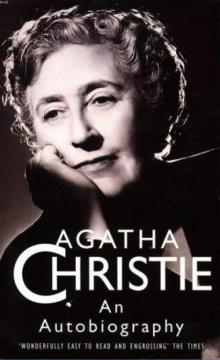 Agahta Christie: An autobiography
 Hallowe'en Party hp-36
 Black Coffee
 The Mysterious Affair at Styles hp-1
 Three-Act Tragedy
 Best detective short stories
 Three Blind Mice
 Nemesis mm-11
 The Mirror Crack'd from Side to Side mm-8
 The ABC Murders
 Poirot's Early Cases
 The Unexpected Guest
 A Caribbean Mystery - Miss Marple 09
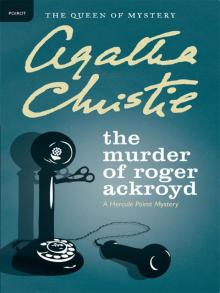 The Murder of Roger Ackroyd
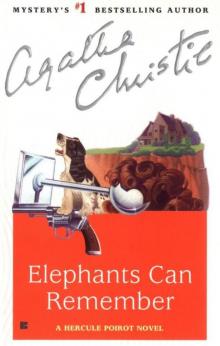 Elephants Can Remember hp-39
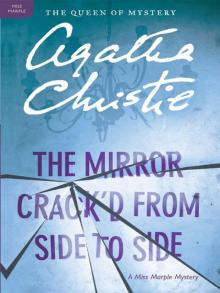 The Mirror Crack'd: from Side to Side
 Sad Cypress hp-21
 Peril at End House
 Elephants Can Remember
 Best detective stories of Agatha Christie
 Hercule Poirot's Christmas
 The Body In The Library - Miss Marple 02
 Evil Under the Sun hp-25
 The Capture of Cerberus
 The Hound of Death and Other Stories
 The Thirteen Problems (miss marple)
 The Thirteen Problems-The Tuesday Night Club
 Spider's Web
 At Bertram's Hotel mm-12
 The Murder at the Vicarage (Agatha Christie Mysteries Collection)
 A Caribbean Mystery (miss marple)
 A Murder Is Announced
 Clues to Christie
 The Moving Finger mm-3
 The Harlequin Tea Set and Other Stories
 Murder on the Links
 The Murder at the Vicarage
 N or M tat-3
 The Secret Adversary tat-1
 The Burden
 Mrs McGinty's Dead hp-28
 Dead Man's Folly hp-31
 Peril at End House hp-8
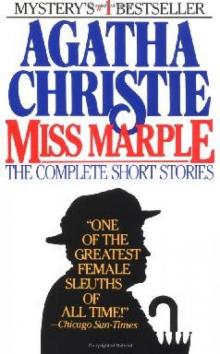 Complete Short Stories Of Miss Marple mm-16
 Curtain: Poirot's Last Case
 The Man in the Brown Suit
 They Do It With Mirrors mm-6