
- Home
- Agatha Christie
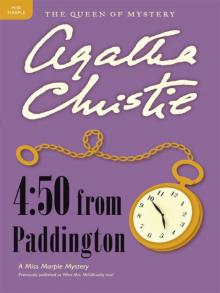
4:50 From Paddington
4:50 From Paddington Read online
Agatha Christie
4:50 from Paddington
A Miss Marple Mystery
Contents
Cover
Title Page
Chapter One
Chapter Two
Chapter Three
Chapter Four
Chapter Five
Chapter Six
Chapter Seven
Chapter Eight
Chapter Nine
Chapter Ten
Chapter Eleven
Chapter Twelve
Chapter Thirteen
Chapter Fourteen
Chapter Fifteen
Chapter Sixteen
Chapter Seventeen
Chapter Eighteen
Chapter Nineteen
Chapter Twenty
Chapter Twenty-One
Chapter Twenty-Two
Chapter Twenty-Three
Chapter Twenty-Four
Chapter Twenty-Five
Chapter Twenty-Six
Chapter Twenty-Seven
About the Author
Other Books by Agatha Christie
Credit
Copyright
About the Publisher
One
Mrs. McGillicuddy panted along the platform in the wake of the porter carrying her suitcase. Mrs. McGillicuddy was short and stout, the porter was tall and free-striding. In addition, Mrs. McGillicuddy was burdened with a large quantity of parcels; the result of a day’s Christmas shopping. The race was, therefore, an uneven one, and the porter turned the corner at the end of the platform whilst Mrs. McGillicuddy was still coming up the straight.
No. 1 Platform was not at the moment unduly crowded, since a train had just gone out, but in the no-man’s-land beyond, a milling crowd was rushing in several directions at once, to and from undergrounds, left-luggage offices, tea rooms, inquiry offices, indicator boards, and the two outlets, Arrival and Departure, to the outside world.
Mrs. McGillicuddy and her parcels were buffeted to and fro, but she arrived eventually at the entrance to No. 3 Platform, and deposited one parcel at her feet whilst she searched her bag for the ticket that would enable her to pass the stern uniformed guardian at the gate.
At that moment, a Voice, raucous yet refined, burst into speech over her head.
“The train standing at Platform 3,” the Voice told her, “is the 4:50 for Brackhampton, Milchester, Waverton, Carvil Junction, Roxeter and stations to Chadmouth. Passengers for Brackhampton and Milchester travel at the rear of the train. Passengers for Vanequay change at Roxeter.” The Voice shut itself off with a click, and then reopened conversation by announcing the arrival at Platform 9 of the 4:35 from Birmingham and Wolverhampton.
Mrs. McGillicuddy found her ticket and presented it. The man clipped it, murmured: “On the right—rear portion.”
Mrs. McGillicuddy padded up the platform and found her porter, looking bored and staring into space, outside the door of a third-class carriage.
“Here you are, lady.”
“I’m travelling first-class,” said Mrs. McGillicuddy.
“You didn’t say so,” grumbled the porter. His eye swept her masculine-looking pepper-and-salt tweed coat disparagingly.
Mrs. McGillicuddy, who had said so, did not argue the point. She was sadly out of breath.
The porter retrieved the suitcase and marched with it to the adjoining coach where Mrs. McGillicuddy was installed in solitary splendour. The 4:50 was not much patronized, the first-class clientele preferring either the faster morning express, or the 6:40 with dining car. Mrs. McGillicuddy handed the porter his tip which he received with disappointment, clearly considering it more applicable to third-class than to first-class travel. Mrs. McGillicuddy, though prepared to spend money on comfortable travel after a night journey from the North and a day’s feverish shopping, was at no time an extravagant tipper.
She settled herself back on the plush cushions with a sigh and opened her magazine. Five minutes later, whistles blew, and the train started. The magazine slipped from Mrs. McGillicuddy’s hand, her head dropped sideways, three minutes later she was asleep. She slept for thirty-five minutes and awoke refreshed. Resettling her hat which had slipped askew she sat up and looked out of the window at what she could see of the flying countryside. It was quite dark now, a dreary misty December day—Christmas was only five days ahead. London had been dark and dreary; the country was no less so, though occasionally rendered cheerful with its constant clusters of lights as the train flashed through towns and stations.
“Serving last tea now,” said an attendant, whisking open the corridor door like a jinn. Mrs. McGillicuddy had already partaken of tea at a large department store. She was for the moment amply nourished. The attendant went on down the corridor uttering his monotonous cry. Mrs. McGillicuddy looked up at the rack where her various parcels reposed, with a pleased expression. The face towels had been excellent value and just what Margaret wanted, the space gun for Robby and the rabbit for Jean were highly satisfactory, and that evening coatee was just the thing she herself needed, warm but dressy. The pullover for Hector, too…her mind dwelt with approval on the soundness of her purchases.
Her satisfied gaze returned to the window, a train travelling in the opposite direction rushed by with a screech, making the windows rattle and causing her to start. The train clattered over points and passed through a station.
Then it began suddenly to slow down, presumably in obedience to a signal. For some minutes it crawled along, then stopped, presently it began to move forward again. Another up-train passed them, though with less vehemence than the first one. The train gathered speed again. At that moment another train, also on a down-line, swerved inwards towards them, for a moment with almost alarming effect. For a time the two trains ran parallel, now one gaining a little, now the other. Mrs. McGillicuddy looked from her window through the windows of the parallel carriages. Most of the blinds were down, but occasionally the occupants of the carriages were visible. The other train was not very full and there were many empty carriages.
At the moment when the two trains gave the illusion of being stationary, a blind in one of the carriages flew up with a snap. Mrs. McGillicuddy looked into the lighted first-class carriage that was only a few feet away.
Then she drew her breath in with a gasp and half-rose to her feet.
Standing with his back to the window and to her was a man. His hands were round the throat of a woman who faced him, and he was slowly, remorselessly, strangling her. Her eyes were starting from their sockets, her face was purple and congested. As Mrs. McGillicuddy watched fascinated, the end came; the body went limp and crumpled in the man’s hands.
At the same moment, Mrs. McGillicuddy’s train slowed down again and the other began to gain speed. It passed forward and a moment or two later it had vanished from sight.
Almost automatically Mrs. McGillicuddy’s hand went up to the communication cord, then paused, irresolute. After all, what use would it be ringing the cord of the train in which she was travelling? The horror of what she had seen at such close quarters, and the unusual circumstances, made her feel paralysed. Some immediate action was necessary—but what?
The door of her compartment was drawn back and a ticket collector said, “Ticket, please.”
Mrs. McGillicuddy turned to him with vehemence.
“A woman has been strangled,” she said. “In a train that has just passed. I saw it.”
The ticket collector looked at her doubtfully.
“I beg your pardon, madam?”
“A man strangled a woman! In a train. I saw it—through there.” She pointed to the window.
The ticket collector looked extremely doubtful.
“Strangled?” he said disbeli
evingly.
“Yes, strangled! I saw it, I tell you. You must do something at once!”
The ticket collector coughed apologetically.
“You don’t think, madam, that you may have had a little nap and—er—” he broke off tactfully.
“I have had a nap, but if you think this was a dream, you’re quite wrong. I saw it, I tell you.”
The ticket collector’s eyes dropped to the open magazine lying on the seat. On the exposed page was a girl being strangled whilst a man with a revolver threatened the pair from an open doorway.
He said persuasively: “Now don’t you think, madam, that you’d been reading an exciting story, and that you just dropped off, and awaking a little confused—”
Mrs. McGillicuddy interrupted him.
“I saw it,” she said. “I was as wide awake as you are. And I looked out of the window into the window of the train alongside, and a man was strangling a woman. And what I want to know is, what are you going to do about it?”
“Well—madam—”
“You’re going to do something, I suppose?”
The ticket collector sighed reluctantly and glanced at his watch.
“We shall be in Brackhampton in exactly seven minutes. I’ll report what you’ve told me. In what direction was the train you mention going?”
“This direction, of course. You don’t suppose I’d have been able to see this if a train had flashed past going in the other direction?”
The ticket collector looked as though he thought Mrs. McGillicuddy was quite capable of seeing anything anywhere as the fancy took her. But he remained polite.
“You can rely on me, madam,” he said. “I will report your statement. Perhaps I might have your name and address—just in case….”
Mrs. McGillicuddy gave him the address where she would be staying for the next few days and her permanent address in Scotland, and he wrote them down. Then he withdrew with the air of a man who has done his duty and dealt successfully with a tiresome member of the travelling public.
Mrs. McGillicuddy remained frowning and vaguely unsatisfied. Would the ticket collector report her statement? Or had he just been soothing her down? There were, she supposed vaguely, a lot of elderly women travelling around, fully convinced that they had unmasked communist plots, were in danger of being murdered, saw flying saucers and secret space ships, and reported murders that had never taken place. If the man dismissed her as one of those….
The train was slowing down now, passing over points and running through the bright lights of a large town.
Mrs. McGillicuddy opened her handbag, pulled out a receipted bill which was all she could find, wrote a rapid note on the back of it with her ball-pen, put it into a spare envelope that she fortunately happened to have, stuck the envelope down and wrote on it.
The train drew slowly into a crowded platform. The usual ubiquitous Voice was intoning:
“The train now arriving at Platform 1 is the 5:38 for Milchester, Waverton, Roxeter, and stations to Chadmouth. Passengers for Market Basing take the train now waiting at No. 3 platform. No. 1 bay for stopping train to Carbury.”
Mrs. McGillicuddy looked anxiously along the platform. So many passengers and so few porters. Ah, there was one! She hailed him authoritatively.
“Porter! Please take this at once to the Stationmaster’s office.”
She handed him the envelope, and with it a shilling.
Then, with a sigh, she leaned back. Well, she had done what she could. Her mind lingered with an instant’s regret on the shilling… Sixpence would really have been enough….
Her mind went back to the scene she had witnessed. Horrible, quite horrible… She was a strong-nerved woman, but she shivered. What a strange—what a fantastic thing to happen to her, Elspeth McGillicuddy! If the blind of the carriage had not happened to fly up… But that, of course, was Providence.
Providence had willed that she, Elspeth McGillicuddy, should be a witness of the crime. Her lips set grimly.
Voices shouted, whistles blew, doors were banged shut. The 5:38 drew slowly out of Brackhampton station. An hour and five minutes later it stopped at Milchester.
Mrs. McGillicuddy collected her parcels and her suitcase and got out. She peered up and down the platform. Her mind reiterated its former judgment: Not enough porters. Such porters as there were seemed to be engaged with mail bags and luggage vans. Passengers nowadays seemed always expected to carry their own cases. Well, she couldn’t carry her suitcase and her umbrella and all her parcels. She would have to wait. In due course she secured a porter.
“Taxi?”
“There will be something to meet me, I expect.”
Outside Milchester station, a taxi-driver who had been watching the exit came forward. He spoke in a soft local voice.
“Is it Mrs. McGillicuddy? For St. Mary Mead?”
Mrs. McGillicuddy acknowledged her identity. The porter was recompensed, adequately if not handsomely. The car, with Mrs. McGillicuddy, her suitcase, and her parcels drove off into the night. It was a nine-mile drive. Sitting bolt upright in the car, Mrs. McGillicuddy was unable to relax. Her feelings yearned for expression. At last the taxi drove along the familiar village street and finally drew up at its destination; Mrs. McGillicuddy got out and walked up the brick path to the door. The driver deposited the cases inside as the door was opened by an elderly maid. Mrs. McGillicuddy passed straight through the hall to where, at the open sitting room door, her hostess awaited her; an elderly frail old lady.
“Elspeth!”
“Jane!”
They kissed and, without preamble or circumlocution, Mrs. McGillicuddy burst into speech.
“Oh, Jane!” she wailed. “I’ve just seen a murder!”
Two
True to the precepts handed down to her by her mother and grandmother—to wit: that a true lady can neither be shocked nor surprised—Miss Marple merely raised her eyebrows and shook her head, as she said:
“Most distressing for you, Elspeth, and surely most unusual. I think you had better tell me about it at once.”
That was exactly what Mrs. McGillicuddy wanted to do. Allowing her hostess to draw her nearer to the fire, she sat down, pulled off her gloves and plunged into a vivid narrative.
Miss Marple listened with close attention. When Mrs. McGillicuddy at last paused for breath, Miss Marple spoke with decision.
“The best thing, I think, my dear, is for you to go upstairs and take off your hat and have a wash. Then we will have supper—during which we will not discuss this at all. After supper we can go into the matter thoroughly and discuss it from every aspect.”
Mrs. McGillicuddy concurred with this suggestion. The two ladies had supper, discussing, as they ate, various aspects of life as lived in the village of St. Mary Mead. Miss Marple commented on the general distrust of the new organist, related the recent scandal about the chemist’s wife, and touched on the hostility between the schoolmistress and the village institute. They then discussed Miss Marple’s and Mrs. McGillicuddy’s gardens.
“Paeonies,” said Miss Marple as she rose from table, “are most unaccountable. Either they do—or they don’t do. But if they do establish themselves, they are with you for life, so to speak, and really most beautiful varieties nowadays.”
They settled themselves by the fire again, and Miss Marple brought out two old Waterford glasses from a corner cupboard, and from another cupboard produced a bottle.
“No coffee tonight for you, Elspeth,” she said. “You are already overexcited (and no wonder!) and probably would not sleep. I prescribe a glass of my cowslip wine, and later, perhaps, a cup of camo-mile tea.”
Mrs. McGillicuddy acquiescing in these arrangements, Miss Marple poured out the wine.
“Jane,” said Mrs. McGillicuddy, as she took an appreciative sip, “you don’t think, do you, that I dreamt it, or imagined it?”
“Certainly not,” said Miss Marple with warmth.
Mrs. McGillicuddy heaved a sigh of relief.
“That ticket collector,” she said, “he thought so. Quite polite, but all the same—”
“I think, Elspeth, that that was quite natural under the circumstances. It sounded—and indeed was—a most unlikely story. And you were a complete stranger to him. No, I have no doubt at all that you saw what you’ve told me you saw. It’s very extraordinary—but not at all impossible. I recollect myself being interested when a train ran parallel to one on which I was travelling, to notice what a vivid and intimate picture one got of what was going on in one or two of the carriages. A little girl, I remember once, playing with a teddy bear, and suddenly she threw it deliberately at a fat man who was asleep in the corner and he bounced up and looked most indignant, and the other passengers looked so amused. I saw them all quite vividly. I could have described afterwards exactly what they looked like and what they had on.”
Mrs. McGillicuddy nodded gratefully.
“That’s just how it was.”
“The man had his back to you, you say. So you didn’t see his face?”
“No.”
“And the woman, you can describe her? Young, old?”
“Youngish. Between thirty and thirty-five, I should think. I couldn’t say closer than that.”
“Good-looking?”
“That again, I couldn’t say. Her face, you see, was all contorted and—”
Miss Marple said quickly:
“Yes, yes, I quite understand. How was she dressed?”
“She had on a fur coat of some kind, a palish fur. No hat. Her hair was blonde.”
“And there was nothing distinctive that you can remember about the man?”
 Murder in the Mews
 Postern of Fate
 The Regatta Mystery and Other Stories
 Sad Cypress
 Why Didn't They Ask Evans?
 After the Funeral
 And Then There Were None
 The Witness for the Prosecution
 Murder on the Orient Express
 The Seven Dials Mystery
 Hercule Poirot: The Complete Short Stories
 The Mysterious Affair at Styles
 Sleeping Murder
 Hickory Dickory Dock
 The Moving Finger
 The Mirror Crack'd From Side to Side
 Ordeal by Innocence
 Mrs. McGinty's Dead
 Problem at Pollensa Bay and Other Stories
 Death Comes as the End
 Endless Night
 Parker Pyne Investigates
 Poirot's Early Cases: 18 Hercule Poirot Mysteries
 Murder Is Easy
 An Autobiography
 One, Two, Buckle My Shoe
 A Pocket Full of Rye
 The Mysterious Mr. Quin
 The Mystery of the Blue Train
 Hercule Poirot's Christmas: A Hercule Poirot Mystery
 Cards on the Table (SB)
 Three Act Tragedy
 The Secret Adversary
 The Body in the Library
 The Pale Horse
 While the Light Lasts
 The Golden Ball and Other Stories
 Double Sin and Other Stories
 The Secret of Chimneys
 Five Little Pigs
 Murder in Mesopotamia: A Hercule Poirot Mystery
 The Mousetrap and Other Plays
 Lord Edgware Dies
 The Hound of Death
 The Murder on the Links
 A Caribbean Mystery
 Peril at End House: A Hercule Poirot Mystery
 The Thirteen Problems
 By the Pricking of My Thumbs
 Mrs McGinty's Dead / the Labours of Hercules (Agatha Christie Collected Works)
 Appointment With Death
 Murder Is Announced
 The Big Four
 Three Blind Mice and Other Stories
 Hercule Poirot- the Complete Short Stories
 Passenger to Frankfurt
 They Do It With Mirrors
 Poirot Investigates
 The Coming of Mr. Quin: A Short Story
 4:50 From Paddington
 The Last Seance
 Dead Man's Folly
 The Adventure of the Christmas Pudding
 The A.B.C. Murders
 Death in the Clouds
 Towards Zero
 The Listerdale Mystery and Eleven Other Stories
 Hallowe'en Party
 Murder at the Vicarage
 Cards on the Table
 Death on the Nile
 Curtain
 Partners in Crime
 The Listerdale Mystery / the Clocks (Agatha Christie Collected Works)
 Taken at the Flood
 Dumb Witness
 The Complete Tommy and Tuppence
 Problem at Pollensa Bay
 Cat Among the Pigeons
 At Bertram's Hotel
 Nemesis
 Miss Marple's Final Cases
 The Hollow
 Midwinter Murder
 They Came to Baghdad
 Third Girl
 Destination Unknown
 Hercule Poirot and the Greenshore Folly
 Postern of Fate tat-5
 Midsummer Mysteries
 Poirot's Early Cases hp-38
 Sparkling Cyanide
 Star over Bethlehem
 Black Coffee hp-7
 Hercule Poirot's Casebook (hercule poirot)
 Murder in Mesopotamia hp-14
 A Pocket Full of Rye: A Miss Marple Mystery (Miss Marple Mysteries)
 The Listerdale Mystery
 The Complete Tommy & Tuppence Collection
 Lord Edgware Dies hp-8
 Death in the Clouds hp-12
 Short Stories
 Third Girl hp-37
 Why Didn't They Ask Evans
 Adventure of the Christmas Pudding and other stories
 Cards on the Table hp-15
 The Mystery of the Blue Train hp-6
 After the Funeral hp-29
 Poirot Investigates hp-3
 Murder on the Links hp-2
 The Mysterious Mr Quin
 Curtain hp-39
 Hercule Poirot's Christmas hp-19
 Partners in Crime tat-2
 The Clocks hp-36
 Murder, She Said
 The Clocks
 The Hollow hp-24
 Appointment with Death hp-21
 Murder in the mews hp-18
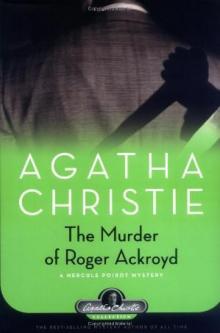 The Murder Of Roger Ackroyd hp-4
 Dumb Witness hp-16
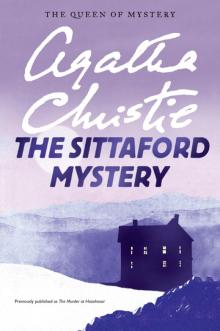 The Sittaford Mystery
 Mrs McGinty's Dead
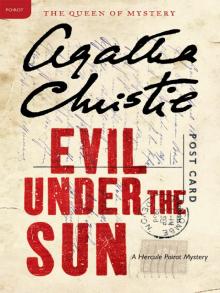 Evil Under the Sun
 The A.B.C. Murders hp-12
 The Murder at the Vicarage mm-1
 The Body in the Library mm-3
 Miss Marple and Mystery
 Sleeping Murder mm-14
 By the Pricking of My Thumbs tat-4
 A Pocket Full of Rye mm-7
 Hickory Dickory Dock: A Hercule Poirot Mystery
 The Big Four hp-5
 The Labours of Hercules hp-26
 The Complete Miss Marple Collection
 The Labours of Hercules
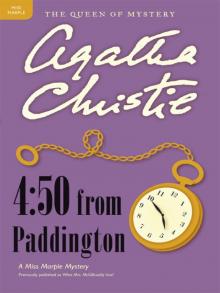 4.50 From Paddington
 A Murder Is Announced mm-5
 Agahta Christie: An autobiography
 Hallowe'en Party hp-36
 Black Coffee
 The Mysterious Affair at Styles hp-1
 Three-Act Tragedy
 Best detective short stories
 Three Blind Mice
 Nemesis mm-11
 The Mirror Crack'd from Side to Side mm-8
 The ABC Murders
 Poirot's Early Cases
 The Unexpected Guest
 A Caribbean Mystery - Miss Marple 09
 The Murder of Roger Ackroyd
 Elephants Can Remember hp-39
 The Mirror Crack'd: from Side to Side
 Sad Cypress hp-21
 Peril at End House
 Elephants Can Remember
 Best detective stories of Agatha Christie
 Hercule Poirot's Christmas
 The Body In The Library - Miss Marple 02
 Evil Under the Sun hp-25
 The Capture of Cerberus
 The Hound of Death and Other Stories
 The Thirteen Problems (miss marple)
 The Thirteen Problems-The Tuesday Night Club
 Spider's Web
 At Bertram's Hotel mm-12
 The Murder at the Vicarage (Agatha Christie Mysteries Collection)
 A Caribbean Mystery (miss marple)
 A Murder Is Announced
 Clues to Christie
 The Moving Finger mm-3
 The Harlequin Tea Set and Other Stories
 Murder on the Links
 The Murder at the Vicarage
 N or M tat-3
 The Secret Adversary tat-1
 The Burden
 Mrs McGinty's Dead hp-28
 Dead Man's Folly hp-31
 Peril at End House hp-8
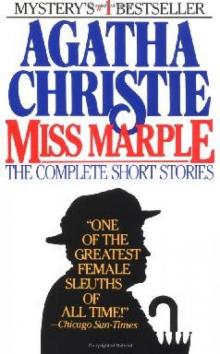 Complete Short Stories Of Miss Marple mm-16
 Curtain: Poirot's Last Case
 The Man in the Brown Suit
 They Do It With Mirrors mm-6