
- Home
- Agatha Christie
Curtain hp-39 Page 9
Curtain hp-39 Read online
Page 9
I tackled Judith after breakfast.
"Where had you been yesterday evening when I met you, you and Major Allerton?"
The trouble is that when you are intent on one aspect of a thing, you tend to ignore all other aspects. I was quite startled when Judith flared out at me.
"Really, Father, I don't see what business it is of yours."
I stared at her, rather taken aback.
"I – I only asked."
"Yes, but why? Why do you have to be continually asking questions? What was I doing? Where did I go? Who was I with? It's really intolerable!"
The funny part of it was, of course, that this time I was not really asking at all where Judith was. It was Allerton I was interested in.
I tried to pacify her.
"Really, Judith, I don't see why I can't ask a simple question."
"I don't see why you want to know."
"I don't particularly. I mean, I just wondered why neither of you – er – seemed to know what had happened."
"About the accident, do you mean? I'd been down to the village, if you must know, to get some stamps."
I pounced on the personal pronoun.
"Allerton wasn't with you then?"
Judith gave an exasperated gasp.
"No, he was not," she said in tones of cold fury. "Actually we'd met just near the house and only about two minutes before we met you. I hope you're satisfied now. But I'd just like to say that if I'd spent the whole day walking around with Major Allerton, it's really not your business. I'm twenty-one and earning my own living and how I spend my time is entirely my own business."
"Entirely," I said quickly, trying to stem the tide.
"I'm glad you agree." Judith looked mollified. She gave a rueful half smile. "Oh, dearest, do try and not come the heavy father quite so much. You don't know how maddening it is. If you just wouldn't fuss so."
"I won't – I really won't in future," I promised her.
Franklin came striding along at this minute.
"Hullo, Judith. Come along. We're later than usual."
His manner was curt and really hardly polite. In spite of myself I felt annoyed. I knew that Franklin was Judith's employer, that he had a call upon her time and that, since he paid for it, he was entitled to give her orders. Nevertheless I did not see why he could not behave with common courtesy. His manners were not what one would call polished to anyone, but he did at least behave to most people with a certain amount of everyday politeness. But to Judith, especially of late, his manner was always curt and dictatorial in the extreme. He hardly looked at her when he spoke and merely barked out orders. Judith never appeared to resent this, but I did on her behalf. It crossed my mind that it was especially unfortunate since it contrasted in such a very marked way with Allerton's exaggerated attention. No doubt John Franklin was a ten times better man than Allerton, but he compared very badly with him from the point of view of attraction.
I watched Franklin as he strode along the path towards the laboratory, his ungainly walk, his angular build, the jutting bones of his face and head, his red hair and his freckles. An ugly man and an ungainly man. None of the more obvious qualities. A good brain, yes, but women seldom fall for brains alone. I reflected with dismay that Judith, owing to the circumstances of her job, practically never came into contact with other men. She had no opportunity of sizing up various attractive men. Compared with the gruff and unattractive Franklin, Allerton's meretricious charms stood out with all the force of contrast. My poor girl had no chance of appraising him at his true worth.
Supposing that she should come seriously to lose her heart to him? The irritability she had shown just now was a disquieting sign. Allerton, I knew, was a real bad lot. He was possibly something more. If Allerton were X -?
He could be. At the time that the shot was fired, he had not been with Judith.
But what was the motive of all these seemingly purposeless crimes? There was, I felt sure, nothing of the madman about Allerton. He was sane – altogether sane – and utterly unprincipled.
And Judith – my Judith – was seeing altogether too much of him.
II
Up to this time, though I had been faintly worried about my daughter, my preoccupation over X and the possibility of a crime occurring at any moment had successfully driven more personal problems to the back of my mind.
Now that the blow had fallen, that a crime had been attempted and had mercifully failed, I was free to reflect on these things. And the more I did so, the more anxious I became. A chance word spoken one day revealed to me the fact that Allerton was a married man.
Boyd Carrington, who knew all about everyone, enlightened me further. Allerton's wife was a devout Roman Catholic. She had left him a short time after their marriage. Owing to her religion there had never been any question of divorce.
"And if you ask me," said Boyd Carrington frankly, "it suits the blighter down to the ground. His intentions are always dishonourable, and a wife in the background suits the book very well."
Pleasant hearing for a father!
The days after the shooting accident passed uneventfully enough on the surface, but they accompanied a growing undercurrent of unrest on my part.
Colonel Luttrell spent much time in his wife's bedroom. A nurse had arrived to take charge of the patient and Nurse Craven was able to resume her ministrations to Mrs Franklin.
Without wishing to be ill-natured, I must admit that I had observed signs on Mrs Franklin's part of irritation at not being the invalid en chef. The fuss and attention that centred round Mrs Luttrell was clearly very displeasing to the little lady who was accustomed to her own health being the main topic of the day.
She lay about in a hammock chair, her hand to her side, complaining of palpitations. No food that was served was suitable for her, and all her exactions were masked by a veneer of patient endurance.
"I do so hate making a fuss," she murmured plaintively to Poirot. "I feel so ashamed of my wretched health. It's so – so humiliating always to have to ask people to be doing things for me. I sometimes think ill health is really a crime. If one isn't healthy and insensitive, one isn't fit for this world and one should just be put quietly away."
"Ah no, madame." Poirot, as always, was gallant. "The delicate exotic flower has to have the shelter of the greenhouse – it cannot endure the cold winds. It is the common weed that thrives in the wintry air – but it is not to be prized higher on that account. Consider my case – cramped, twisted, unable to move, but I – I do not think of quitting life. I enjoy still what I can – the food, the drink, the pleasures of the intellect."
Mrs Franklin sighed and murmured:
"Ah, but it's different for you. You have no one but yourself to consider. In my case, there is my poor John. I feel acutely what a burden I am to him. A sickly useless wife. A millstone hung round his neck."
"He has never said that you are that, I am sure."
"Oh not said so. Of course not. But men are so transparent, poor dears. And John isn't any good at concealing his feelings. He doesn't mean, of course, to be unkind, but he's – well, mercifully for himself he's a very insensitive sort of person. He's no feelings and so he doesn't expect anyone else to have them. It's so terribly lucky to be born thick-skinned."
"I should not describe Dr Franklin as thick-skinned."
"Wouldn't you? Oh, but you don't know him as well as I do. Of course I know that if it wasn't for me, he would be much freer. Sometimes, you know, I get so terribly depressed that I think what a relief it would be to end it all."
"Oh, come, madame."
"After all, what use am I to anybody? To go out of it all into the Great Unknown -" She shook her head. "And then John would be free."
"Great fiddlesticks," said Nurse Craven when I repeated this conversation to her. "She won't do anything of the kind. Don't you worry, Captain Hastings. These ones that talk about 'ending it all' in a dying duck voice haven't the faintest intention of doing anything of the kind."
On a particularly fine morning Curtiss had taken Poirot down to the corner below the beech trees near the laboratory. This was a favourite spot of his. It was sheltered from any east wind and in fact hardly any breeze could ever be felt there. This suited Poirot, who abhorred draughts and was always suspicious of the fresh air. Actually, I think, he much preferred to be indoors but had grown to tolerate the outer air when muffled in rugs.
I strolled down to join him there, and just as I got there, Mrs Franklin came out of the laboratory.
She was most becomingly dressed and looked remarkably cheerful. She explained that she was driving over with Boyd Carrington to see the house and to give expert advice on choosing cretonnes.
"I left my handbag in the lab yesterday when I was talking to John," she explained. "Poor John, he and Judith have driven into Tadcaster – they were short of some chemical reagent or other."
She sank down on a seat near Poirot and shook her head with a comical expression. "Poor dears – I'm so glad I haven't got the scientific mind. On a lovely day like this – it – all seems so puerile."
"You must not let scientists hear you say that, madame."
"No, of course not." Her face changed. It grew serious. She said quietly:
"You mustn't think, M. Poirot, that I don't admire my husband. I do. I think the way he just lives for his work is really – tremendous."
There was a little tremor in her voice.
A suspicion crossed my mind that Mrs Franklin rather liked playing different roles. At this moment she was being the loyal and hero-worshipping wife.
She leaned forward, placing an earnest hand on Poirot's knee.
"John," she said, "is really a – a kind of saint. It makes me quite frightened sometimes."
To call Franklin a saint was somewhat overstating the case, I thought, but Barbara Franklin went on, her eyes shining:
"He'll do anything – take any risk – just to advance the sum of human knowledge. That is pretty fine, don't you think?"
"Assuredly, assuredly," said Poirot quickly.
"But sometimes, you know," went on Mrs Franklin, "I'm really nervous about him. The lengths to which he'll go, I mean. This horrid bean thing he's experimenting with now. I'm so afraid that he'll start experimenting on himself."
"He'd take every precaution, surely," I said.
She shook her head with a slight, rueful smile.
"You don't know John. Did you ever hear about what he did with that new gas?"
I shook my head.
"It was some new gas they wanted to find out about. John volunteered to test it. He was shut up in a tank for something like thirty-six hours – taking his pulse and temperature and respiration – to see what the aftereffects were and if they were the same for men as for animals. It was a frightful risk, so one of the professors told me afterwards. He might easily have passed out altogether. But that's the sort of person John is – absolutely oblivious of his own safety. I think it's rather wonderful, don't you, to be like that? I should never be brave enough."
"It needs, indeed, high courage," said Poirot, "to do these things in cold blood."
Barbara Franklin said:
"Yes, it does. I'm awfully proud of him, you know, but at the same time it makes me rather nervous, too. Because, you see, guinea pigs and frogs are no good after a certain point. You want the human reaction. That's why I feel so terrified that John will go and dose himself with this nasty ordeal bean and that something awful might happen." She sighed and shook her head. "But he only laughs at my fears. He really is a sort of saint, you know."
At this moment Boyd Carrington came towards us.
"Hullo, Babs, ready?"
"Yes, Bill, waiting for you."
"I do hope it won't tire you too much."
"Of course it won't. I feel better today than I have for ages."
She got up, smiled prettily at us both, and walked up the lawn with her tall escort.
"Dr Franklin – the modern saint – h'm," said Poirot.
"Rather a change of attitude," I said. "But I think the lady is like that."
"Like what?"
"Given to dramatizing herself in various roles. One day the misunderstood neglected wife, then the self-sacrificing suffering woman who hates to be a burden on the man she loves. Today it's the hero-worshipping helpmate. The trouble is that all the roles are slightly overdone."
Poirot said thoughtfully:
"You think Mrs Franklin, do you not, rather a fool?"
"Well, I wouldn't say that – yes, perhaps not a very brilliant intellect."
"Ah, she is not your type."
"Who is my type?" I snapped.
Poirot replied unexpectedly:
"Open your mouth and shut your eyes and see what the fairies will send you -"
I was prevented from replying because Nurse Craven came tripping hastily across the grass. She gave us a smile with a brilliant flash of teeth, unlocked the door of the lab, passed inside and reappeared with a pair of gloves.
"First a hanky and now gloves, always something left behind," she observed as she sped back with them to where Barbara Franklin and Boyd Carrington were waiting.
Mrs Franklin, I reflected, was that rather feckless type of woman who always did leave things behind, shedding her possessions and expecting everybody to retrieve them as a matter of course, and even, I fancied, was rather proud of herself for so doing. I had heard her more than once murmur complacently:
"Of course I've got a head like a sieve."
I sat looking after Nurse Craven as she ran across the lawn and out of sight. She ran well, her body was vigorous and well balanced. I said impulsively:
"I should think a girl must get fed up with that sort of life. I mean when there isn't much nursing to be done – when it's just fetch and carry. I don't suppose Mrs Franklin is particularly considerate or kindly."
Poirot's response was distinctly annoying. For no reason whatever, he closed his eyes and murmured:
"Auburn hair."
Undoubtedly Nurse Craven had auburn hair – but I did not see why Poirot should choose just this minute to comment upon it.
I made no reply.
Chapter 11
It was, I think, on the following morning before lunch that a conversation took place which left me vaguely disquieted.
There were four of us – Judith, myself, Boyd Carrington and Norton.
Exactly how the subject started, I am not sure, but we were talking of euthanasia – the case for and against it.
Boyd Carrington, as was natural, did most of the talking, Norton putting in a word or two here and there, and Judith sitting silent but closely attentive.
I myself had confessed that though there seemed, on the face of it, every reason to support the practice, yet in actuality I felt a sentimental shrinking from it. Besides, I said, I thought it would put too much power in the hands of relatives.
Norton agreed with me. He added that he thought it should only be done by the wish and consent of the patient himself where death after prolonged suffering was certain.
Boyd Carrington said:
"Ah, but that's the curious thing. Does the person most concerned ever wish to 'put himself out of his misery,' as we say?"
He then told a story, which he said was authentic, of a man in terrible pain from inoperable cancer. This man had begged the doctor in attendance to "give him something that would finish it all." The doctor had replied: "I can't do that, old man." Later, on leaving, he had placed by the patient some morphia tablets, telling him carefully how many he could safely take and what dose would be dangerous. Although these were left in the patient's charge and he could easily have taken a fatal quantity, he did not do so, "thus proving," said Boyd Carrington, "that, in spite of his words, the man preferred his suffering to a swift and merciful rele
ase."
It was then that Judith spoke for the first time, spoke with vigour and abruptly:
"Of course he would," she said. "It shouldn't have been left to him to decide."
Boyd Carrington asked what she meant.
"I mean that anyone who's weak – in pain and ill – hasn't got the strength to make a decision. They can't. It must be done for them. It's the duty of someone who loves them to make the decision."
"Duty?" I queried dubiously.
Judith turned on me.
"Yes, duty. Someone whose mind is clear and who will take the responsibility."
Boyd Carrington shook his head.
"And end up on the dock charged with murder?"
"Not necessarily. Anyway, if you love someone, you would take the risk."
"But look here, Judith," said Norton. "What you're suggesting is simply a terrific responsibility to take."
"I don't think it is. People are too afraid of responsibility. They'll take responsibility where a dog is concerned – why not with a human being?"
"Well – it's rather different, isn't it?"
Judith said:
"Yes, it's more important."
Norton murmured:
"You take my breath away."
Boyd Carrington asked curiously:
"So you'd take the risk, would you?"
"I think so," said Judith. "I'm not afraid of taking risks."
Boyd Carrington shook his head.
"It wouldn't do, you know. You can't have people here, there, and everywhere taking the law into their own hands. Deciding matters of life and death."
Norton said:
"Actually, you know, Boyd Carrington, most people wouldn't have the nerve to take the responsibility."
He smiled faintly as he looked at Judith.
"Don't believe you would if it came to the point."
Judith said composedly:
 Murder in the Mews
 Postern of Fate
 The Regatta Mystery and Other Stories
 Sad Cypress
 Why Didn't They Ask Evans?
 After the Funeral
 And Then There Were None
 The Witness for the Prosecution
 Murder on the Orient Express
 The Seven Dials Mystery
 Hercule Poirot: The Complete Short Stories
 The Mysterious Affair at Styles
 Sleeping Murder
 Hickory Dickory Dock
 The Moving Finger
 The Mirror Crack'd From Side to Side
 Ordeal by Innocence
 Mrs. McGinty's Dead
 Problem at Pollensa Bay and Other Stories
 Death Comes as the End
 Endless Night
 Parker Pyne Investigates
 Poirot's Early Cases: 18 Hercule Poirot Mysteries
 Murder Is Easy
 An Autobiography
 One, Two, Buckle My Shoe
 A Pocket Full of Rye
 The Mysterious Mr. Quin
 The Mystery of the Blue Train
 Hercule Poirot's Christmas: A Hercule Poirot Mystery
 Cards on the Table (SB)
 Three Act Tragedy
 The Secret Adversary
 The Body in the Library
 The Pale Horse
 While the Light Lasts
 The Golden Ball and Other Stories
 Double Sin and Other Stories
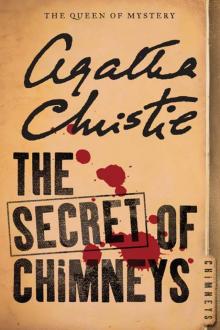 The Secret of Chimneys
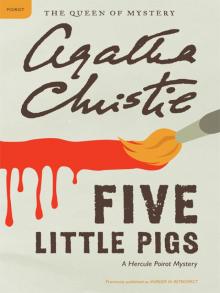 Five Little Pigs
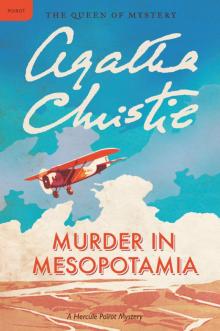 Murder in Mesopotamia: A Hercule Poirot Mystery
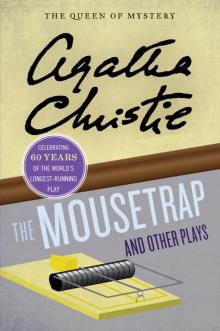 The Mousetrap and Other Plays
 Lord Edgware Dies
 The Hound of Death
 The Murder on the Links
 A Caribbean Mystery
 Peril at End House: A Hercule Poirot Mystery
 The Thirteen Problems
 By the Pricking of My Thumbs
 Mrs McGinty's Dead / the Labours of Hercules (Agatha Christie Collected Works)
 Appointment With Death
 Murder Is Announced
 The Big Four
 Three Blind Mice and Other Stories
 Hercule Poirot- the Complete Short Stories
 Passenger to Frankfurt
 They Do It With Mirrors
 Poirot Investigates
 The Coming of Mr. Quin: A Short Story
 4:50 From Paddington
 The Last Seance
 Dead Man's Folly
 The Adventure of the Christmas Pudding
 The A.B.C. Murders
 Death in the Clouds
 Towards Zero
 The Listerdale Mystery and Eleven Other Stories
 Hallowe'en Party
 Murder at the Vicarage
 Cards on the Table
 Death on the Nile
 Curtain
 Partners in Crime
 The Listerdale Mystery / the Clocks (Agatha Christie Collected Works)
 Taken at the Flood
 Dumb Witness
 The Complete Tommy and Tuppence
 Problem at Pollensa Bay
 Cat Among the Pigeons
 At Bertram's Hotel
 Nemesis
 Miss Marple's Final Cases
 The Hollow
 Midwinter Murder
 They Came to Baghdad
 Third Girl
 Destination Unknown
 Hercule Poirot and the Greenshore Folly
 Postern of Fate tat-5
 Midsummer Mysteries
 Poirot's Early Cases hp-38
 Sparkling Cyanide
 Star over Bethlehem
 Black Coffee hp-7
 Hercule Poirot's Casebook (hercule poirot)
 Murder in Mesopotamia hp-14
 A Pocket Full of Rye: A Miss Marple Mystery (Miss Marple Mysteries)
 The Listerdale Mystery
 The Complete Tommy & Tuppence Collection
 Lord Edgware Dies hp-8
 Death in the Clouds hp-12
 Short Stories
 Third Girl hp-37
 Why Didn't They Ask Evans
 Adventure of the Christmas Pudding and other stories
 Cards on the Table hp-15
 The Mystery of the Blue Train hp-6
 After the Funeral hp-29
 Poirot Investigates hp-3
 Murder on the Links hp-2
 The Mysterious Mr Quin
 Curtain hp-39
 Hercule Poirot's Christmas hp-19
 Partners in Crime tat-2
 The Clocks hp-36
 Murder, She Said
 The Clocks
 The Hollow hp-24
 Appointment with Death hp-21
 Murder in the mews hp-18
 The Murder Of Roger Ackroyd hp-4
 Dumb Witness hp-16
 The Sittaford Mystery
 Mrs McGinty's Dead
 Evil Under the Sun
 The A.B.C. Murders hp-12
 The Murder at the Vicarage mm-1
 The Body in the Library mm-3
 Miss Marple and Mystery
 Sleeping Murder mm-14
 By the Pricking of My Thumbs tat-4
 A Pocket Full of Rye mm-7
 Hickory Dickory Dock: A Hercule Poirot Mystery
 The Big Four hp-5
 The Labours of Hercules hp-26
 The Complete Miss Marple Collection
 The Labours of Hercules
 4.50 From Paddington
 A Murder Is Announced mm-5
 Agahta Christie: An autobiography
 Hallowe'en Party hp-36
 Black Coffee
 The Mysterious Affair at Styles hp-1
 Three-Act Tragedy
 Best detective short stories
 Three Blind Mice
 Nemesis mm-11
 The Mirror Crack'd from Side to Side mm-8
 The ABC Murders
 Poirot's Early Cases
 The Unexpected Guest
 A Caribbean Mystery - Miss Marple 09
 The Murder of Roger Ackroyd
 Elephants Can Remember hp-39
 The Mirror Crack'd: from Side to Side
 Sad Cypress hp-21
 Peril at End House
 Elephants Can Remember
 Best detective stories of Agatha Christie
 Hercule Poirot's Christmas
 The Body In The Library - Miss Marple 02
 Evil Under the Sun hp-25
 The Capture of Cerberus
 The Hound of Death and Other Stories
 The Thirteen Problems (miss marple)
 The Thirteen Problems-The Tuesday Night Club
 Spider's Web
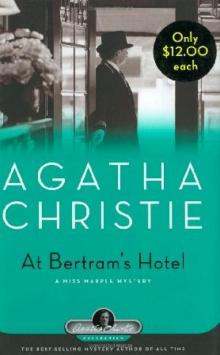 At Bertram's Hotel mm-12
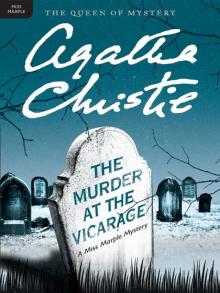 The Murder at the Vicarage (Agatha Christie Mysteries Collection)
 A Caribbean Mystery (miss marple)
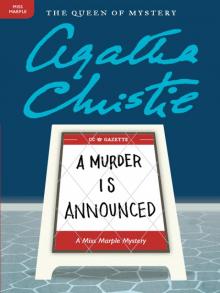 A Murder Is Announced
 Clues to Christie
 The Moving Finger mm-3
 The Harlequin Tea Set and Other Stories
 Murder on the Links
 The Murder at the Vicarage
 N or M tat-3
 The Secret Adversary tat-1
 The Burden
 Mrs McGinty's Dead hp-28
 Dead Man's Folly hp-31
 Peril at End House hp-8
 Complete Short Stories Of Miss Marple mm-16
 Curtain: Poirot's Last Case
 The Man in the Brown Suit
 They Do It With Mirrors mm-6