
- Home
- Agatha Christie
The Pale Horse Page 2
The Pale Horse Read online
Page 2
“That’s what I tell myself,” said Mrs. Oliver, “over and over again, but every single time I can’t believe it, and so I’m in agony.”
She seized her hair again and tugged it violently.
“Don’t,” I cried. “You’ll have it out by the roots.”
“Nonsense,” said Mrs. Oliver. “Hair’s tough. Though when I had measles at fourteen with a very high temperature, it did come out—all round the front. Most shaming. And it was six whole months before it grew properly again. Awful for a girl—girls mind so. I thought of it yesterday when I was visiting Mary Delafontaine in that nursing home. Her hair was coming out just like mine did. She said she’d have to get a false front when she was better. If you’re sixty it doesn’t always grow again, I believe.”
“I saw a girl pull out another girl’s hair by the roots the other night,” I said. I was conscious of a slight note of pride in my voice as one who has seen life.
“What extraordinary places have you been going to?” asked Mrs. Oliver.
“This was in a coffee bar in Chelsea.”
“Oh Chelsea!” said Mrs. Oliver. “Everything happens there, I believe. Beatniks and sputniks and squares and the beat generation. I don’t write about them much because I’m so afraid of getting the terms wrong. It’s safer, I think, to stick to what you know.”
“Such as?”
“People on cruises, and in hotels, and what goes on in hospitals, and on parish councils—and sales of work—and music festivals, and girls in shops, and committees and daily women, and young men and girls who hike round the world in the interests of science, and shop assistants—”
She paused, out of breath.
“That seems fairly comprehensive to be getting on with,” I said.
“All the same, you might take me out to a coffee bar in Chelsea sometime—just to widen my experience,” said Mrs. Oliver wistfully.
“Any time you say. Tonight?”
“Not tonight. I’m too busy writing or rather worrying because I can’t write. That’s really the most tiresome thing about writing—though everything is tiresome really, except the one moment when you get what you think is going to be a wonderful idea, and can hardly wait to begin. Tell me, Mark, do you think it is possible to kill someone by remote control?”
“What do you mean by remote control? Press a button and set off a radioactive death ray?”
“No, no, not science fiction. I suppose,” she paused doubtfully, “I really mean black magic.”
“Wax figures and pins in them?”
“Oh, wax figures are right out,” said Mrs. Oliver scornfully. “But queer things do happen—in Africa or the West Indies. People are always telling you so. How natives just curl up and die. Voodoo—or juju… Anyway, you know what I mean.”
I said that much of that was attributed nowadays to the power of suggestion. Word is always conveyed to the victim that his death has been decreed by the medicine man—and his subconscious does the rest.
Mrs. Oliver snorted.
“If anyone hinted to me that I had been doomed to lie down and die, I’d take a pleasure in thwarting their expectations!”
I laughed.
“You’ve got centuries of good Occidental sceptical blood in your veins. No predispositions.”
“Then you think it can happen?”
“I don’t know enough about the subject to judge. What put it into your head? Is your new masterpiece to be Murder by Suggestion?”
“No, indeed. Good old-fashioned rat poison or arsenic is good enough for me. Or the reliable blunt instrument. Not firearms if possible. Firearms are so tricky. But you didn’t come here to talk to me about my books.”
“Frankly no—The fact is that my cousin Rhoda Despard has got a church fête and—”
“Never again!” said Mrs. Oliver. “You know what happened last time? I arranged a Murder Hunt, and the first thing that happened was a real corpse. I’ve never quite got over it!”
“It’s not a Murder Hunt. All you’d have to do would be to sit in a tent and sign your own books—at five bob a time.”
“We-e-l-l-l,” said Mrs. Oliver doubtfully. “That might be all right. I shouldn’t have to open the fête? Or say silly things? Or have to wear a hat?”
None of these things, I assured her, would be required of her.
“And it would only be for an hour or two,” I said coaxingly. “After that, there’ll be a cricket match—no, I suppose not this time of year. Children dancing, perhaps. Or a fancy dress competition—”
Mrs. Oliver interrupted me with a wild scream.
“That’s it,” she cried. “A cricket ball! Of course! He sees it from the window…rising up in the air…and it distracts him—and so he never mentions the cockatoo! What a good thing you came, Mark. You’ve been wonderful.”
“I don’t quite see—”
“Perhaps not, but I do,” said Mrs. Oliver. “It’s all rather complicated, and I don’t want to waste time explaining. Nice as it’s been to see you, what I’d really like you to do now is to go away. At once.”
“Certainly. About the fête—”
“I’ll think about it. Don’t worry me now. Now where on earth did I put my spectacles? Really, the way things just disappear….”
Two
I
Mrs. Gerahty opened the door of the presbytery in her usual sharp pouncing style. It was less like answering a bell, than a triumphant manoeuvre expressing the sentiment “I’ve caught you this time!”
“Well now, and what would you be wanting?” she demanded belligerently.
There was a boy on the doorstep, a very negligible looking boy—a boy not easily noticeable nor easily remembered—a boy like a lot of other boys. He sniffed because he had a cold in his head.
“Is this the priest’s place?”
“Is it Father Gorman you’re wanting?”
“He’s wanted,” said the boy.
“Who wants him and where and what for?”
“Benthall Street. Twenty-three. Woman as says she’s dying. Mrs. Coppins sent me. This is a Carthlick place all right, isn’t it? Woman says the vicar won’t do.”
Mrs. Gerahty reassured him on this essential point, told him to stop where he was and retired into the presbytery. Some three minutes later a tall elderly priest came out carrying a small leather case in his hand.
“I’m Father Gorman,” he said. “Benthall Street? That’s round by the railway yards, isn’t it?”
“’Sright. Not more than a step, it isn’t.”
They set out together, the priest walking with a free striding step.
“Mrs.— Coppins, did you say? Is that the name?”
“She’s the one what owns the house. Lets rooms, she does. It’s one of the lodgers wants you. Name of Davis, I think.”
“Davis. I wonder now. I don’t remember—”
“She’s one of you all right. Carthlick, I mean. Said as no vicar would do.”
The priest nodded. They came to Benthall Street in a very short time. The boy indicated a tall dingy house in a row of other tall dingy houses.
“That’s it.”
“Aren’t you coming in?”
“I don’t belong. Mrs. C. gave me a bob to take the message.”
“I see. What’s your name?”
“Mike Potter.”
“Thank you, Mike.”
“You’re welcome,” said Mike, and went off whistling. The imminence of death for someone else did not affect him.
The door of No. 23 opened and Mrs. Coppins, a large redfaced woman, stood on the threshold and welcomed the visitor with enthusiasm.
“Come in, come in. She’s bad, I’d say. Ought to be in hospital, not here. I’ve rung up, but goodness knows when anybody will come nowadays. Six hours my sister’s husband had to wait when he broke his leg. Disgraceful, I call it. Health Service, indeed! Take your money and when you want them where are they?”
She was preceding the priest up the narrow stairs as she talke
d.
“What’s the matter with her?”
“’Flu’s what she’s had. Seemed better. Went out too soon I’d say. Anyway she comes in last night looking like death. Took to her bed. Wouldn’t eat anything. Didn’t want a doctor. This morning I could see she was in a raging fever. Gone to her lungs.”
“Pneumonia?”
Mrs. Coppins, out of breath by now, made a noise like a steam engine, which seemed to signify assent. She flung open a door, stood aside to let Father Gorman go in, said over his shoulder: “Here’s the Reverend for you. Now you’ll be all right!” in a spuriously cheerful way, and retired.
Father Gorman advanced. The room, furnished with old-fashioned Victorian furniture, was clean and neat. In the bed near the window a woman turned her head feebly. That she was very ill, the priest saw at once.
“You’ve come… There isn’t much time—” she spoke between panting breaths. “…Wickedness…such wickedness… I must… I must… I can’t die like this… Confess—confess—my sin—grievous—grievous…” the eyes wandered…half closed….
A rambling monotone of words came from her lips.
Father Gorman came to the bed. He spoke as he had spoken so often—so very often. Words of authority—of reassurance…the words of his calling and of his belief. Peace came into the room… The agony went out of the tortured eyes….
Then, as the priest ended his ministry, the dying woman spoke again.
“Stopped… It must be stopped… You will….”
The priest spoke with reassuring authority.
“I will do what is necessary. You can trust me….”
A doctor and an ambulance arrived simultaneously a little later. Mrs. Coppins received them with gloomy triumph.
“Too late as usual!” she said. “She’s gone….”
II
Father Gorman walked back through the gathering twilight. There would be fog tonight, it was growing denser rapidly. He paused for a moment, frowning. Such a fantastic extraordinary story… How much of it was born of delirium and high fever? Some of it was true, of course—but how much? Anyway it was important to make a note of certain names whilst they were fresh in his memory. The St. Francis Guild would be assembled when he got back. He turned abruptly into a small café, ordered a cup of coffee and sat down. He felt in the pocket of his cassock. Ah, Mrs. Gerahty—he’d asked her to mend the lining. As usual, she hadn’t! His notebook and a loose pencil and the few coins he carried about him, had gone through to the lining. He prised up a coin or two and the pencil, but the notebook was too difficult. The coffee came, and he asked if he could have a piece of paper.
“This do you?”
It was a torn paper bag. Father Gorman nodded and took it. He began to write—the names—it was important not to forget the names. Names were the sort of thing he did forget….
The café door opened and three young lads in Edwardian dress came in and sat down noisily.
Father Gorman finished his memorandum. He folded up the scrap of paper and was about to shove it into his pocket when he remembered the hole. He did what he had often done before, pressed the folded scrap down into his shoe.
A man came in quietly and sat down in a far corner. Father Gorman took a sip or two of the weak coffee for politeness’ sake, called for his bill, and paid. Then he got up and went out.
The man who had just come in seemed to change his mind. He looked at his watch as though he had mistaken the time, got up, and hurried out.
The fog was coming on fast. Father Gorman quickened his steps. He knew his district very well. He took a shortcut by turning down the small street which ran close by the railway. He may have been conscious of steps behind him but he thought nothing of them. Why should he?
The blow from the cosh caught him completely unaware. He heeled forward and fell….
III
Dr. Corrigan, whistling “Father O’Flynn,” walked into the D.D.I.’s room and addressed Divisional Detective-Inspector Lejeune in a chatty manner.
“I’ve done your padre for you,” he said.
“And the result?”
“We’ll save the technical terms for the coroner. Well and truly coshed. First blow probably killed him, but whoever it was made sure. Quite a nasty business.”
“Yes,” said Lejeune.
He was a sturdy man, dark haired and grey eyed. He had a misleadingly quiet manner, but his gestures were sometimes surprisingly graphic and betrayed his French Huguenot ancestry.
He said thoughtfully:
“Nastier than would be necessary for robbery?”
“Was it robbery?” asked the doctor.
“One supposes so. His pockets were turned out and the lining of his cassock ripped.”
“They couldn’t have hoped for much,” said Corrigan. “Poor as a rat, most of these parish priests.”
“They battered his head in—to make sure,” mused Lejeune. “One would like to know why.”
“Two possible answers,” said Corrigan. “One, it was done by a vicious-minded young thug, who likes violence for violence’s sake—there are plenty of them about these days, more’s the pity.”
“And the other answer?”
The doctor shrugged his shoulders.
“Somebody had it in for your Father Gorman. Was that likely?”
Lejeune shook his head.
“Most unlikely. He was a popular man, well loved in the district. No enemies, as far as one can hear. And robbery’s unlikely. Unless—”
“Unless what?” asked Corrigan. “The police have a clue! Am I right?”
“He did have something on him that wasn’t taken away. It was in his shoe, as a matter of fact.”
Corrigan whistled.
“Sounds like a spy story.”
Lejeune smiled.
“It’s much simpler than that. He had a hole in his pocket. Sergeant Pine talked to his housekeeper. She’s a bit of a slattern, it seems. Didn’t keep his clothes mended in the way she might have done. She admitted that, now and again, Father Gorman would thrust a paper or a letter down the inside of his shoe—to prevent it from going down into the lining of his cassock.”
“And the killer didn’t know that?”
“The killer never thought of that! Assuming, that is, that this piece of paper is what he may have been wanting—rather than a miserly amount of small change.”
“What was on the paper?”
Lejeune reached into a drawer and took out a flimsy piece of creased paper.
“Just a list of names,” he said.
Corrigan looked at it curiously.
Ormerod
Sandford
Parkinson
Hesketh-Dubois
Shaw
Harmondsworth
Tuckerton
Corrigan?
Delafontaine?
His eyebrows rose.
“I see I’m on the list!”
“Do any of the names mean anything to you?” asked the inspector.
“None of them.”
“And you’ve never met Father Gorman?”
“Never.”
“Then you won’t be able to help us much.”
“Any ideas as to what this list means—if anything?”
Lejeune did not reply directly.
“A boy called at Father Gorman’s about seven o’clock in the evening. Said a woman was dying and wanted the priest. Father Gorman went with him.”
“Where to? If you know.”
“We know. It didn’t take long to check up. Twenty-three Benthall Street. House owned by a woman named Coppins. The sick woman was a Mrs. Davis. The priest got there at a quarter past seven and was with her for about half an hour. Mrs. Davis died just before the ambulance arrived to take her to hospital.”
“I see.”
“The next we hear of Father Gorman is at Tony’s Place, a small down-at-heel café. Quite decent, nothing criminal about it, serves refreshment of poor quality and isn’t much patronised. Father Gorman asked
for a cup of coffee. Then apparently he felt in his pocket, couldn’t find what he wanted and asked the proprietor, Tony, for a piece of paper. This—” he gestured with his finger, “is the piece of paper.”
“And then?”
“When Tony brought the coffee, the priest was writing on the paper. Shortly afterwards he left, leaving his coffee practically untasted (for which I don’t blame him), having completed this list and shoved it into his shoe.”
“Anybody else in the place?”
“Three boys of the Teddy boy type came in and sat at one table and an elderly man came in and sat at another. The latter went away without ordering.”
“He followed the priest?”
“Could be. Tony didn’t notice when he went. Didn’t notice what he looked like, either. Described him as an inconspicuous type of man. Respectable. The kind of man that looks like everybody else. Medium height, he thinks, dark blue overcoat—or could be brown. Not very dark and not very fair. No reason he should have had anything to do with it. One just doesn’t know. He hasn’t come forward to say he saw the priest in Tony’s place—but it’s early days yet. We’re asking for anyone who saw Father Gorman between a quarter to eight and eight fifteen to communicate with us. Only two people so far have responded: a woman and a chemist who had a shop nearby. I’ll be going to see them presently. His body was found at eight fifteen by two small boys in West Street—you know it? Practically an alleyway, bounded by the railway on one side. The rest—you know.”
Corrigan nodded. He tapped the paper.
“What’s your feeling about this?”
“I think it’s important,” said Lejeune.
“The dying woman told him something and he got these names down on paper as soon as he could before he forgot them? The only thing is—would he have done that if he’d been told under seal of the confessional?”
“It needn’t have been under a seal of secrecy,” said Lejeune. “Suppose, for instance, these names have a connection of—say, blackmail—”
“That’s your idea, is it?”
“I haven’t any ideas yet. This is just a working hypothesis. These people were being blackmailed. The dying woman was either the blackmailer, or she knew about the blackmail. I’d say that the general idea was, repentance, confession, and a wish to make reparation as far as possible. Father Gorman assumed the responsibility.”
 Murder in the Mews
 Postern of Fate
 The Regatta Mystery and Other Stories
 Sad Cypress
 Why Didn't They Ask Evans?
 After the Funeral
 And Then There Were None
 The Witness for the Prosecution
 Murder on the Orient Express
 The Seven Dials Mystery
 Hercule Poirot: The Complete Short Stories
 The Mysterious Affair at Styles
 Sleeping Murder
 Hickory Dickory Dock
 The Moving Finger
 The Mirror Crack'd From Side to Side
 Ordeal by Innocence
 Mrs. McGinty's Dead
 Problem at Pollensa Bay and Other Stories
 Death Comes as the End
 Endless Night
 Parker Pyne Investigates
 Poirot's Early Cases: 18 Hercule Poirot Mysteries
 Murder Is Easy
 An Autobiography
 One, Two, Buckle My Shoe
 A Pocket Full of Rye
 The Mysterious Mr. Quin
 The Mystery of the Blue Train
 Hercule Poirot's Christmas: A Hercule Poirot Mystery
 Cards on the Table (SB)
 Three Act Tragedy
 The Secret Adversary
 The Body in the Library
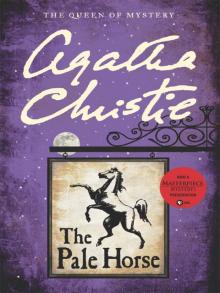 The Pale Horse
 While the Light Lasts
 The Golden Ball and Other Stories
 Double Sin and Other Stories
 The Secret of Chimneys
 Five Little Pigs
 Murder in Mesopotamia: A Hercule Poirot Mystery
 The Mousetrap and Other Plays
 Lord Edgware Dies
 The Hound of Death
 The Murder on the Links
 A Caribbean Mystery
 Peril at End House: A Hercule Poirot Mystery
 The Thirteen Problems
 By the Pricking of My Thumbs
 Mrs McGinty's Dead / the Labours of Hercules (Agatha Christie Collected Works)
 Appointment With Death
 Murder Is Announced
 The Big Four
 Three Blind Mice and Other Stories
 Hercule Poirot- the Complete Short Stories
 Passenger to Frankfurt
 They Do It With Mirrors
 Poirot Investigates
 The Coming of Mr. Quin: A Short Story
 4:50 From Paddington
 The Last Seance
 Dead Man's Folly
 The Adventure of the Christmas Pudding
 The A.B.C. Murders
 Death in the Clouds
 Towards Zero
 The Listerdale Mystery and Eleven Other Stories
 Hallowe'en Party
 Murder at the Vicarage
 Cards on the Table
 Death on the Nile
 Curtain
 Partners in Crime
 The Listerdale Mystery / the Clocks (Agatha Christie Collected Works)
 Taken at the Flood
 Dumb Witness
 The Complete Tommy and Tuppence
 Problem at Pollensa Bay
 Cat Among the Pigeons
 At Bertram's Hotel
 Nemesis
 Miss Marple's Final Cases
 The Hollow
 Midwinter Murder
 They Came to Baghdad
 Third Girl
 Destination Unknown
 Hercule Poirot and the Greenshore Folly
 Postern of Fate tat-5
 Midsummer Mysteries
 Poirot's Early Cases hp-38
 Sparkling Cyanide
 Star over Bethlehem
 Black Coffee hp-7
 Hercule Poirot's Casebook (hercule poirot)
 Murder in Mesopotamia hp-14
 A Pocket Full of Rye: A Miss Marple Mystery (Miss Marple Mysteries)
 The Listerdale Mystery
 The Complete Tommy & Tuppence Collection
 Lord Edgware Dies hp-8
 Death in the Clouds hp-12
 Short Stories
 Third Girl hp-37
 Why Didn't They Ask Evans
 Adventure of the Christmas Pudding and other stories
 Cards on the Table hp-15
 The Mystery of the Blue Train hp-6
 After the Funeral hp-29
 Poirot Investigates hp-3
 Murder on the Links hp-2
 The Mysterious Mr Quin
 Curtain hp-39
 Hercule Poirot's Christmas hp-19
 Partners in Crime tat-2
 The Clocks hp-36
 Murder, She Said
 The Clocks
 The Hollow hp-24
 Appointment with Death hp-21
 Murder in the mews hp-18
 The Murder Of Roger Ackroyd hp-4
 Dumb Witness hp-16
 The Sittaford Mystery
 Mrs McGinty's Dead
 Evil Under the Sun
 The A.B.C. Murders hp-12
 The Murder at the Vicarage mm-1
 The Body in the Library mm-3
 Miss Marple and Mystery
 Sleeping Murder mm-14
 By the Pricking of My Thumbs tat-4
 A Pocket Full of Rye mm-7
 Hickory Dickory Dock: A Hercule Poirot Mystery
 The Big Four hp-5
 The Labours of Hercules hp-26
 The Complete Miss Marple Collection
 The Labours of Hercules
 4.50 From Paddington
 A Murder Is Announced mm-5
 Agahta Christie: An autobiography
 Hallowe'en Party hp-36
 Black Coffee
 The Mysterious Affair at Styles hp-1
 Three-Act Tragedy
 Best detective short stories
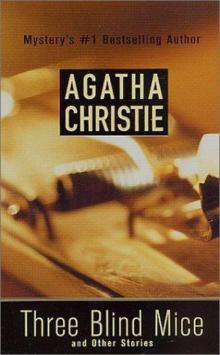 Three Blind Mice
 Nemesis mm-11
 The Mirror Crack'd from Side to Side mm-8
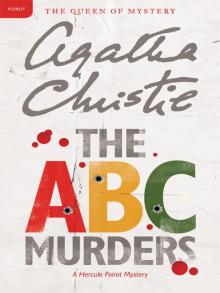 The ABC Murders
 Poirot's Early Cases
 The Unexpected Guest
 A Caribbean Mystery - Miss Marple 09
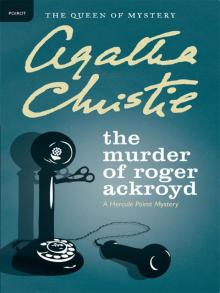 The Murder of Roger Ackroyd
 Elephants Can Remember hp-39
 The Mirror Crack'd: from Side to Side
 Sad Cypress hp-21
 Peril at End House
 Elephants Can Remember
 Best detective stories of Agatha Christie
 Hercule Poirot's Christmas
 The Body In The Library - Miss Marple 02
 Evil Under the Sun hp-25
 The Capture of Cerberus
 The Hound of Death and Other Stories
 The Thirteen Problems (miss marple)
 The Thirteen Problems-The Tuesday Night Club
 Spider's Web
 At Bertram's Hotel mm-12
 The Murder at the Vicarage (Agatha Christie Mysteries Collection)
 A Caribbean Mystery (miss marple)
 A Murder Is Announced
 Clues to Christie
 The Moving Finger mm-3
 The Harlequin Tea Set and Other Stories
 Murder on the Links
 The Murder at the Vicarage
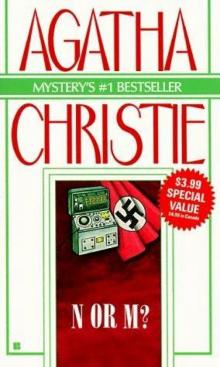 N or M tat-3
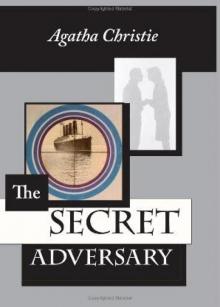 The Secret Adversary tat-1
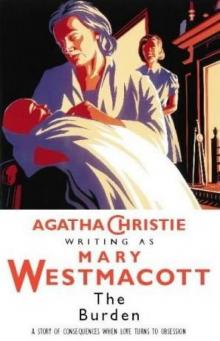 The Burden
 Mrs McGinty's Dead hp-28
 Dead Man's Folly hp-31
 Peril at End House hp-8
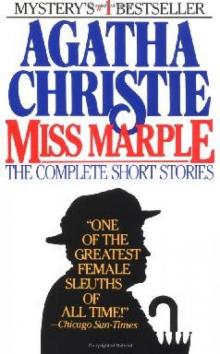 Complete Short Stories Of Miss Marple mm-16
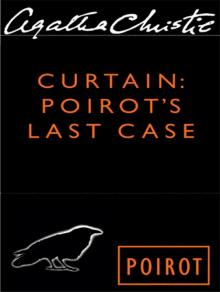 Curtain: Poirot's Last Case
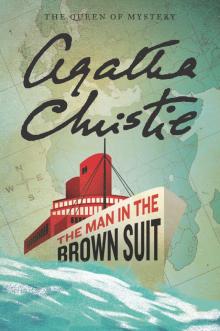 The Man in the Brown Suit
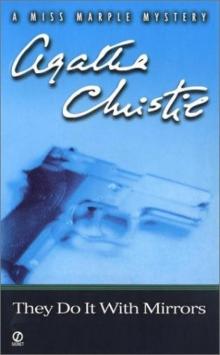 They Do It With Mirrors mm-6