
- Home
- Agatha Christie
Best detective stories of Agatha Christie Page 2
Best detective stories of Agatha Christie Read online
Page 2
Mrs Merrowdene leaned forward, watching him. A little smile crossed her lips. She spoke to him - very softly and gently....
“You made a mistake, Mr Evans. You thought I wanted to kill George.... How stupid of you - how very stupid.”
She sat there a minute longer looking at the dead man, the third man who had threatened to cross her path and separate her from the man she loved.
Her smile broadened. She looked more than ever like a madonna. Then she raised her voice and called:
“George, George!... Oh, do come here! I’m afraid there’s been the most dreadful accident.... Poor Mr Evans....”
THE MILLION DOLLAR BOND ROBBERY
“What a number of bond robberies there have been lately!” I observed one morning, laying aside the newspaper. “Poirot, let us forsake the science of detection, and take to crime instead!’’
“You are on the - how do you say it? - get-rich-quick tack, eh, mon ami?”
“Well, look at this last coup, the million dollars’ worth of Liberty Bonds which the London and Scottish Bank were sending to New York, and which disappeared in such a remarkable manner on board the Olimpia.”
“If it were not for the mal de mer, and the difficulty of practising the so excellent method of Laverguier for a longer time than the few hours of crossing the Channel, I should delight to voyage myself on one of these big liners,” murmured Poirot dreamily.
“Yes, indeed,” I said enthusiastically. “Some of them must be perfect palaces; the swimming baths, the lounges, the restaurant, the palm courts -really, it must be hard to believe that one is on the sea.”
“Me, I always know when I am on the sea,” said Poirot sadly. “And all those bagatelles that you enumerate, they say nothing to me; but, my friend, consider for a moment the geniuses that travel as it were incognito! On board these floating palaces, as you so justly call them, one would meet the élite, the haute noblesse of the criminal world!” I laughed.
“So that’s the way your enthusiasm runs! You would have liked to cross swords with the man who sneaked the Liberty Bonds?”
The landlady interrupted us.
“A young lady as wants to see you, Mr Poirot. Here’s her card.’’
The card bore the inscription: Miss Esmie Farquhar, and Poirot, after diving under the table to retrieve a stray crumb, and putting it carefully in the wastepaper basket, nodded to the landlady to admit her.
In another minute one of the most charming girls I have ever seen was ushered into the room. She was perhaps about five-and-twenty, with big brown eyes and a perfect figure. She was well-dressed and perfectly composed in manner.
“Sit down, I beg of you, mademoiselle. This is my friend, Captain Hastings, who aids me in my little problems.”
“I am afraid it is a big problem I have brought you today, Monsieur Poirot,” said the girl, giving me a pleasant bow as she seated herself. “I dare say you have read about it in the papers. I am referring to the theft of Liberty Bonds on the Olimpia.” Some astonishment must have shown itself on Poirot’s face, for she continued quickly: “You are doubtless asking yourself what I have to do with a grave institution like the London and Scottish Bank. In one sense nothing, in another sense everything. You see, Monsieur Poirot, I am engaged to Mr Philip Ridgeway.”
“Aha! and Mr Philip Ridgeway -”
“Was in charge of the bonds when they were stolen. Of course no actual blame can attach to him, it was not his fault in any way. Nevertheless, he is half distraught over the matter, and his uncle, I know, insists that he must carelessly have mentioned having them in his possession. It is a terrible setback in his career.” “Who is his uncle?” “Mr Vavasour, joint Reneral manager of the London and Scottish Bank.” “Suppose, Miss Farquhar, that you recount to me the whole story?” “Very well. As you know, the Bank wished to extend their credits in America, and for this purpose decided to send over a million dollars in Liberty Bonds. Mr Vavasour selected his nephew, who had occupied a position of trust in the Bank for many years and who was conversant with all the details of the Bank’s dealings in New York, to make the trip. The Olimpia sailed from Liverpool on the 23rd, and the bonds were handed over to Philip on the morning of that day by Mr Vavasour and Mr Shaw, the two joint general managers of the London and Scottish Bank. They were counted, enclosed in a package, and sealed in his presence, and he then locked the package at once in his portmanteau.” “A portmanteau with an ordinary lock?” “No, Mr Shaw insisted on a special lock being fitted to it by Hubbs’s. Philip, as I say, placed the package at the bottom of the trunk. It was stolen just a few hours before reaching New York. A rigorous search of the whole ship was made, but without result. The bonds seemed literally to have vanished into thin air.”
Poirot made a grimace.
“But they did not vanish absolutely, since I gather that they were sold in small parcels within half an hour of the docking of the Olimpia! Well, undoubtedly the next thing is for me to see Mr Ridgeway.”
“I was about to suggest that you should lunch with me at the ‘Cheshire Cheese’. Philip will be there. He is meeting me, but does not yet know that I have been consulting you on his behalf.”
We agreed to this suggestion readily enough, and drove there in a taxi.
Mr Philip Ridgeway was there before us, and looked some- what surprised to see his fiancée arriving with two complete strangers. He was a nice-looking young fellow, tall and spruce, with a touch of greying hair at the temples, though he could not have been much over thirty.
Miss Farquhar went up to him and laid her hand on his arm.
“You must forgive me acting without consulting you, Philip,” she said. “Let me introduce you to Monsieur Hercule Poirot, of whom you must often have heard, and his friend, Captain Hastings.”
Ridgeway looked very astonished.
“Of course I have heard of you. Monsieur Poirot,” he said, as he shook hands. “But I had no idea that Esmée was thinking of consulting you about my -our trouble.”
“I was afraid you would not let me do it, Philip,” said Miss Farquhar meekly.
“So you took care to be on the safe side,” he observed with a smile. “I hope Monsieur Poirot will be able to throw some light on this extraordinary puzzle, for I confess frankly that I am nearly out of my mind with worry and anxiety about it. “
Indeed, his face looked drawn and haggard and showed only too clearly the strain under which he was labouring.
“Well, well,” said Poirot. “Let us lunch, and over lunch we will put our heads together and see what can be done. I want to hear Mr Ridgeway’s story from his own lips.”
Whilst we devoured the excellent steak and kidney pudding of the establishment, Philip Ridgeway narrated the circumstances leading to the disappearance of the bonds. His story agreed with that of Miss Farquhar in every particular. When he had finished, Poirot took up the thread with a question.
“What exactly led you to discover that the bonds had been stolen, Mr Ridgeway?” He laughed rather bitterly.
“The thing stared me in the face, Monsieur Poirot. I couldn’t have missed it. My cabin trunk was half out from under the bunk and all scratched and cut about where they’d tried to force the lock.”
“But I understood that it had been opened with a key?”
“That’s so. They tried to force it, but couldn’t. And, in the end, they must have got it unlocked somehow or other.”
“Curious,” said Poirot, his eyes beginning to flicker with the green light I knew so well. “Very curious! They waste much, much time trying to prise it open, and then - sarpristi! they find that they have the key all the time - for each of Hubbs’s locks are unique.”
“That’s just why they couldn’t have had the key. It never left me day or night.”
“You are sure of that?”
I can swear to it, and besides, if they had had the key or a duplicate, why should they waste time trying to force an obviously unforceable lock?”
“Ah! there is exactly the ques
tion we are asking ourselves! I venture to prophesy that the solution, if we ever find it, will hinge on that curious fact. I beg of you not to assault me if I ask you one more question: Are you perfectly certain that you did not leave the trunk unlocked?”
Philip Ridgeway merely looked at him, and Poirot gesticulated apologetically.
“Ah, but these things can happen, I assure you! Very well, the bonds were stolen from the trunk. What did the thief do with them? How did he manage to get ashore with them?”
“Ah!” cried Ridgeway. “That’s just it. How? Word was passed to the Customs authorities, and every soul that left the ship was gone over with a toothcomb!”
“And the bonds, I gather, made a bulky package?”
“Certainly they did. They could hardly have been hidden on board - and anyway we know they weren’t, because they were offered for sale within half an hour of the Olimpia’s arrival, long before I got the cables going and the numbers sent out. One broker swears he bought some of them even before the Olimpia got in. But you can’t send bonds by wireless.”
“Not by wireless, but did any tug come alongside?”
“Only the official ones, and that was after the alarm was given when everyone was on the lookout. I was watching out myself for their being passed over to someone that way. My God, Monsieur Poirot, this thing will drive me mad! People are beginning to say I stole them myself.”
“But you also were searched on landing, weren’t you?” asked Poirot gently.
The young man stared at him in a puzzled manner.
“You do not catch my meaning, I see,” said Poirot, smiling enigmatically. “Now I should like to make a few inquiries at the Bank.”
Ridgeway produced a card and scribbled a few words on it.
“Send this in and my uncle will see you at once.” Poirot thanked him, bade farewell to Miss Farquhar, and together we started out for Threadneedle Street and the head office of the London and Scottish Bank. On production of Ridgeway’s card, we were led through the labyrinth of counters and desks, skirting paying-in clerks and paying-out clerks and up to a small office on the first floor where the joint general managers received us. They were two grave gentlemen, who had grown grey in the service of the Bank. Mr Vavasour had a short white beard, Mr Shaw was clean shaven.
“I understand you are strictly a private inquiry agent?” said Mr Vavasour. “Quite so, quite so. We have, of course placed ourselves in the hands of Scotland Yard. Inspector McNeil has charge of the case. A very able officer, I believe.”
“I am sure of it,” said Poirot politely. “You will permit a few questions, on your nephew’s behalf? About this lock, who ordered it from Hubbs’s?”
“I ordered it myself,” said Mr Shaw. “I would not trust to any clerk in the matter. As to the keys, Mr Ridgeway had one, and the other two are held by my colleague and myself.”
“And no clerk has had access to them?”
Mr Shaw turned inquiringly to Mr Vavasour.
“I think I am correct in saying that they have remained in the safe where we placed them on the 23rd,” said Mr Vavasour. “My colleague was unfortunately taken ill a fort-night ago - in fact on the very day that Philip left us. He has only just recovered.”
“Severe bronchitis is no joke to a man of my age,” said Mr Shaw ruefully. “But I’m afraid Mr Vavasour has suffered from the hard work entailed by my absence, especially with this unexpected worry coming on top of everything.”
Poirot asked a few more questions. I judged that he was endeavouring to gauge the exact amount of intimacy between uncle and nephew. Mr Vavasour’s answers were brief and punctilious. His nephew was a trusted official of the Bank, and had no debts or money difficulties that he knew of. He had been entrusted with similar missions in the past. Finally we were politely bowed out.
“I am disappointed,” said Poirot, as we emerged into the street.
“You hoped to discover more? They are such stodgy old men.
“It is not their stodginess which disappoints me, mon ami. I do not expect to find in a Bank manager a ‘keen financier with an eagle glance,’ as your favourite works of fiction put it. No, I am disappointed in the case - it is too easy!”
“Easy?”
“Yes, do you not find it almost childishly simple?”
“You know who stole the bonds?”
“But then -we must -why -”
“Do not confuse and fluster yourself. Hastings. We are not going to do anything at present.”
“But why? What are you waiting for?”
“For the Olimpia. She is due on her return trip from New York on Tuesday.”
“But if you know who stole the bonds, why wait? He may escape.”
“To a South Sea island where there is no extradition? No, mon ami, he would find life very uncongenial there. As to why I wait -eh bien, to the intelligence of Hercule Poirot the case is perfectly clear, but for the benefit of others, not so greatly gifted by the good God - the Inspector McNeil, for instance -it would be as well to make a few inquiries to establish the facts. One must have consideration for those less gifted than oneself.’’
“Good Lord, Poirot! Do you know, I’d give a considerable sum of money to see you make a thorough ass of yourself -just for once. You’re so confoundedly conceited!”
“Do not enrage yourself, Hastings. In verity, I observe that there are times when you almost detest me! Alas, I suffer the penalties of greatness!”
The little man puffed out his chest, and sighed so comically that I was forced to laugh.
Tuesday saw us speeding to Liverpool in a first-class carriage of the L. & N.W.R. Poirot had obstinately refused to enlighten me as to his suspicions -or certainties. He contented himself with expressing surprise that I, too, was not equally au fait with the situation. I disdained to argue, and entrenched my curiosity behind a rampart of pretended indifference.
Once arrived at the quay alongside which lay the big transatlantic liner, Poirot became brisk and alert. Our proceedings consisted in interviewing four successive stewards and inquiring after a friend of Poirot’s who had crossed to New York on the 23rd.
“An elderly gentleman, wearing glasses. A great invalid, hardly moved out of his cabin.”
The description appeared to tally with one Mr Ventnor who had occupied the cabin C24 which was next to that of Philip Ridgeway. Although unable to see how Poirot had deduced Mr Ventnor’s existence and personal appearance, I was keenly excited.
“Tell me,” I cried, “was this gentleman one of the first to land when you got to New York?”
The steward shook his head.
“No, indeed, sir, he was one of the last off the boat.” I retired crestfallen, and observed Poirot grinning at me. He thanked the steward, a note changed hands, and we took our departure.
“It’s all very well,” I remarked heatedly, “but that last answer must have damned your precious theory, grin as you please!”
“As usual, you see nothing, Hastings. That last answer is, on the contrary, the copingstone of my theory.”
I flung up my hands in despair.
“I give it up.
- o -
When we were in the train, speeding towards London, Poirot wrote busily for a few minutes, sealing up the result in an envelope.
“This is for the good Inspector McNeil. We will leave it at Scotland Yard in passing, and then to the Rendezvous Restaurant, where I have asked Miss Esmée Farquhar to do us the honour of dining with us.”
“What about Ridgeway?”
“What about him?” asked Poirot with a twinkle.
“Why, you surely don’t think - you can’t -”
“The habit of incoherence is growing upon you, Hastings. As a matter of fact I did think. If Ridgeway had been the thief -which was perfectly possible- the case would have been charming, a piece of neat methodical work.”
“But not so charming for Miss Farquhar.”
“Possibly you are right. Therefore all is for the best. Now, Hastings, let
us review the case. I can see that you are dying to do so. The sealed package is removed from the trunk and vanishes, as Miss Farquhar puts it, into thin air. We will dismiss the thin air theory, which is not practicable at the present stage of science, and consider what is likely to have become of it. Everyone asserts the incredulity of its being smuggled ashore -”
“Yes, but we know -”
“You may know, Hastings, I do not. I take the view that, since it seemed incredible, it was incredible. Two possibilities remain: it was hidden on board -also rather difficult- or it was thrown overboard.”
“With a cork on it, do you mean?”
“Without a cork.”
I stared.
“But if the bonds were thrown overboard, they couldn’t have been sold in New York.”
“I admire your logical mind, Hastings. The bonds were sold in New York, therefore they were not thrown overboard. You see where that leads us?”
TO BE CONTINUED.
SOLUTION OF THE CRIME:
THE MILLION DOLLAR BOND ROBBERY.
“Where we were when we started.”
“Jamais de la vie! If the package was thrown overboard, and the bonds were sold in New York, the package could not have contained the bonds. Is there any evidence that the package did contain the bonds? Remember, Mr Ridgeway never opened it from the time it was placed in his hands in London.’’
“Yes, but then -”
Poirot waved an impatient hand.
“Permit me to continue. The last moment that the bonds are seen as bonds is in the office of the London and Scottish Bank on the morning of the 23rd. They reappear in New York half an hour after the Olimpia gets in, and according to one man, whom nobody listens to, actually before she gets in. Supposing then, that they have never been on the Olimpia at all? Is there any other way they could get to New York? Yes. The Gigantic leaves Southampton on the same day as the Olympia, and she holds the record for the Atlantic. Mailed by the Gigantic, the bonds would be in New York the day before the Olympia arrived. All is clear, the case begins to explain itself. The sealed packet is only a dummy, and the moment of its substitution must be in the office in the Bank. It would be an easy matter for any of the three men present to have prepared a duplicate package which could be substituted for the genuine one. Trés bien, the bonds are mailed to a confederate in New York, with instructions to sell as soon as the Olympia is in, but someone must travel on the Olympia to engineer the supposed moment of the robbery.”
 Murder in the Mews
 Postern of Fate
 The Regatta Mystery and Other Stories
 Sad Cypress
 Why Didn't They Ask Evans?
 After the Funeral
 And Then There Were None
 The Witness for the Prosecution
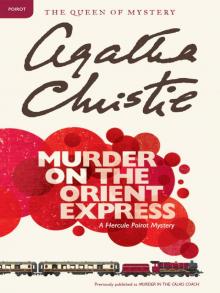 Murder on the Orient Express
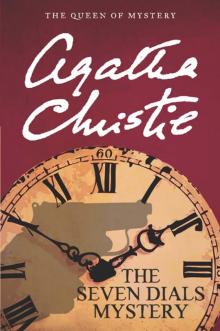 The Seven Dials Mystery
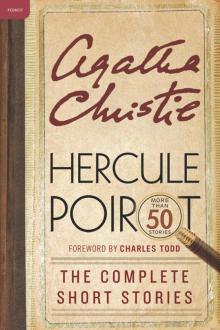 Hercule Poirot: The Complete Short Stories
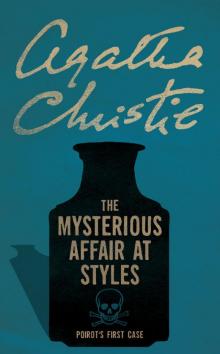 The Mysterious Affair at Styles
 Sleeping Murder
 Hickory Dickory Dock
 The Moving Finger
 The Mirror Crack'd From Side to Side
 Ordeal by Innocence
 Mrs. McGinty's Dead
 Problem at Pollensa Bay and Other Stories
 Death Comes as the End
 Endless Night
 Parker Pyne Investigates
 Poirot's Early Cases: 18 Hercule Poirot Mysteries
 Murder Is Easy
 An Autobiography
 One, Two, Buckle My Shoe
 A Pocket Full of Rye
 The Mysterious Mr. Quin
 The Mystery of the Blue Train
 Hercule Poirot's Christmas: A Hercule Poirot Mystery
 Cards on the Table (SB)
 Three Act Tragedy
 The Secret Adversary
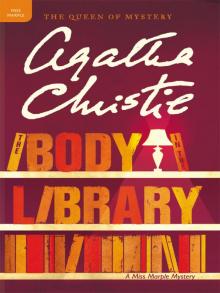 The Body in the Library
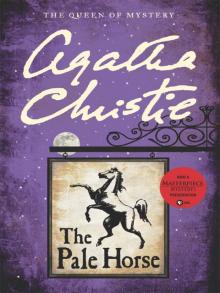 The Pale Horse
 While the Light Lasts
 The Golden Ball and Other Stories
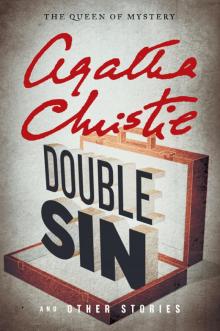 Double Sin and Other Stories
 The Secret of Chimneys
 Five Little Pigs
 Murder in Mesopotamia: A Hercule Poirot Mystery
 The Mousetrap and Other Plays
 Lord Edgware Dies
 The Hound of Death
 The Murder on the Links
 A Caribbean Mystery
 Peril at End House: A Hercule Poirot Mystery
 The Thirteen Problems
 By the Pricking of My Thumbs
 Mrs McGinty's Dead / the Labours of Hercules (Agatha Christie Collected Works)
 Appointment With Death
 Murder Is Announced
 The Big Four
 Three Blind Mice and Other Stories
 Hercule Poirot- the Complete Short Stories
 Passenger to Frankfurt
 They Do It With Mirrors
 Poirot Investigates
 The Coming of Mr. Quin: A Short Story
 4:50 From Paddington
 The Last Seance
 Dead Man's Folly
 The Adventure of the Christmas Pudding
 The A.B.C. Murders
 Death in the Clouds
 Towards Zero
 The Listerdale Mystery and Eleven Other Stories
 Hallowe'en Party
 Murder at the Vicarage
 Cards on the Table
 Death on the Nile
 Curtain
 Partners in Crime
 The Listerdale Mystery / the Clocks (Agatha Christie Collected Works)
 Taken at the Flood
 Dumb Witness
 The Complete Tommy and Tuppence
 Problem at Pollensa Bay
 Cat Among the Pigeons
 At Bertram's Hotel
 Nemesis
 Miss Marple's Final Cases
 The Hollow
 Midwinter Murder
 They Came to Baghdad
 Third Girl
 Destination Unknown
 Hercule Poirot and the Greenshore Folly
 Postern of Fate tat-5
 Midsummer Mysteries
 Poirot's Early Cases hp-38
 Sparkling Cyanide
 Star over Bethlehem
 Black Coffee hp-7
 Hercule Poirot's Casebook (hercule poirot)
 Murder in Mesopotamia hp-14
 A Pocket Full of Rye: A Miss Marple Mystery (Miss Marple Mysteries)
 The Listerdale Mystery
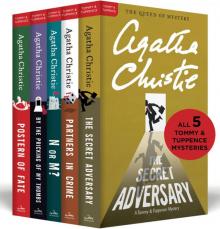 The Complete Tommy & Tuppence Collection
 Lord Edgware Dies hp-8
 Death in the Clouds hp-12
 Short Stories
 Third Girl hp-37
 Why Didn't They Ask Evans
 Adventure of the Christmas Pudding and other stories
 Cards on the Table hp-15
 The Mystery of the Blue Train hp-6
 After the Funeral hp-29
 Poirot Investigates hp-3
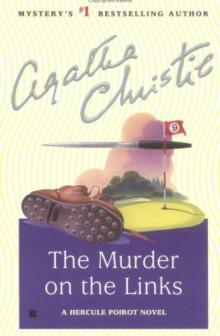 Murder on the Links hp-2
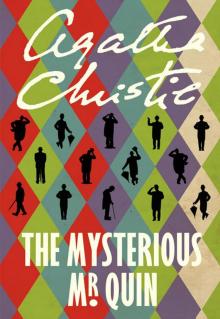 The Mysterious Mr Quin
 Curtain hp-39
 Hercule Poirot's Christmas hp-19
 Partners in Crime tat-2
 The Clocks hp-36
 Murder, She Said
 The Clocks
 The Hollow hp-24
 Appointment with Death hp-21
 Murder in the mews hp-18
 The Murder Of Roger Ackroyd hp-4
 Dumb Witness hp-16
 The Sittaford Mystery
 Mrs McGinty's Dead
 Evil Under the Sun
 The A.B.C. Murders hp-12
 The Murder at the Vicarage mm-1
 The Body in the Library mm-3
 Miss Marple and Mystery
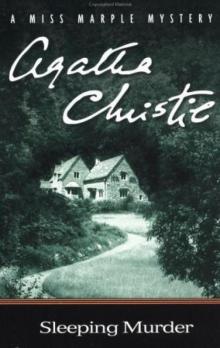 Sleeping Murder mm-14
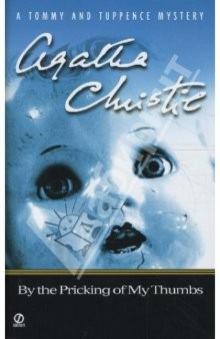 By the Pricking of My Thumbs tat-4
 A Pocket Full of Rye mm-7
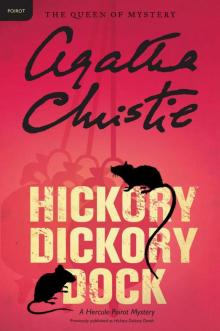 Hickory Dickory Dock: A Hercule Poirot Mystery
 The Big Four hp-5
 The Labours of Hercules hp-26
 The Complete Miss Marple Collection
 The Labours of Hercules
 4.50 From Paddington
 A Murder Is Announced mm-5
 Agahta Christie: An autobiography
 Hallowe'en Party hp-36
 Black Coffee
 The Mysterious Affair at Styles hp-1
 Three-Act Tragedy
 Best detective short stories
 Three Blind Mice
 Nemesis mm-11
 The Mirror Crack'd from Side to Side mm-8
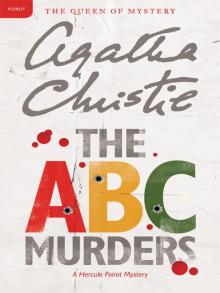 The ABC Murders
 Poirot's Early Cases
 The Unexpected Guest
 A Caribbean Mystery - Miss Marple 09
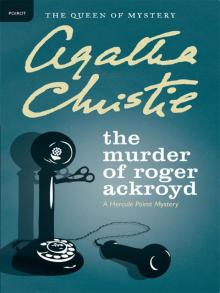 The Murder of Roger Ackroyd
 Elephants Can Remember hp-39
 The Mirror Crack'd: from Side to Side
 Sad Cypress hp-21
 Peril at End House
 Elephants Can Remember
 Best detective stories of Agatha Christie
 Hercule Poirot's Christmas
 The Body In The Library - Miss Marple 02
 Evil Under the Sun hp-25
 The Capture of Cerberus
 The Hound of Death and Other Stories
 The Thirteen Problems (miss marple)
 The Thirteen Problems-The Tuesday Night Club
 Spider's Web
 At Bertram's Hotel mm-12
 The Murder at the Vicarage (Agatha Christie Mysteries Collection)
 A Caribbean Mystery (miss marple)
 A Murder Is Announced
 Clues to Christie
 The Moving Finger mm-3
 The Harlequin Tea Set and Other Stories
 Murder on the Links
 The Murder at the Vicarage
 N or M tat-3
 The Secret Adversary tat-1
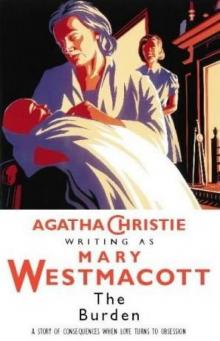 The Burden
 Mrs McGinty's Dead hp-28
 Dead Man's Folly hp-31
 Peril at End House hp-8
 Complete Short Stories Of Miss Marple mm-16
 Curtain: Poirot's Last Case
 The Man in the Brown Suit
 They Do It With Mirrors mm-6