
- Home
- Agatha Christie
Third Girl hp-37 Page 14
Third Girl hp-37 Read online
Page 14
I could feel evil. I knew something was going to happen" and actually they had not felt anything. Was Mrs. Oliver of the same?
He looked at her consideringly. Mrs. Oliver in her own opinion was famous for her intuition. One intuition succeeded another with remarkable rapidity and Mrs. Oliver always claimed the right to justify the particular intuition which turned out to be right!
And yet one shared very often with animals the uneasiness of a dog or a cat before a thunderstorm, the knowledge that there is something wrong, although one does not know what it is that is wrong.
"When did it come upon you, this fear?"
"When I left the main road," said Mrs. Oliver. "Up till then it was all ordinary and quite exciting and - yes, I was enjoying myself, though vexed at finding how difficult it was to trail anybody." She paused, considering. "Just like a game. Then suddenly it didn't seem so much like a game, because they were queer little streets and rather sort of broken-down places, and sheds and open spaces being cleared for building - oh, I don't know, I can't explain it. But was all different. Like a dream really. You know how dreams are. They start with one thing, a party or something, and then suddenly you find you're in a jungle or somewhere quite different-and it's all sinister."
"A jungle?" said Poirot. "Yes, it is interesting you should put it like that.
So it felt to you as though you were in a jungle and you were afraid of a peacock?"
"I don't know that I was especially afraid of him. After all, a peacock isn't a dangerous sort of animal. It's-well I mean I thought of him as a peacock because I thought of him as a decorative creature. A peacock is very decorative, isn't it? And this awful boy is decorative too."
"You didn't have any idea anyone was following you before you were hit?"
"No. No, I'd no idea - but I think he directed me wrong all the same." Poirot nodded thoughtfully.
"But of course it must have been the Peacock who hit me," said Mrs. Oliver. "Who else? The dirty boy in the greasy clothes? He smelt nasty but he wasn't sinister. And it could hardly be that limp Frances something - she was draped over a packing case with long black hair streaming all over the place. She reminded me of some actress or other."
"You say she was acting as a model?"
"Yes. Not for the Peacock. For the dirty boy. I can't remember if you've seen her or not."
"I have not yet had that pleasure - if it is a pleasure."
"Well, she's quite nice looking in an untidy, arty sort of way. Very much made up. Dead white and lots of mascara and the usual kind of limp hair hanging over her face. Works in an art gallery so I suppose it's quite natural that she should be among all the beatniks, acting as a model. How these girls can I suppose she might have fallen for the Peacock. But it's probably the dirty one. All the same I don't see her coshing me on the head somehow."
"I had another possibility in mind, Madame. Someone may have noticed you following David-and in turn followed you."
"Someone saw me trailing David, and then they trailed me?"
"Or someone may have been already in the mews or the yard, keeping perhaps an eye on the same people that you were observing."
"That's an idea, of course," said Mrs. Oliver. "I wonder who they could be?" Poirot gave an exasperated sigh. "Ah, it is there. It is difficult-too difficult.
Too many people, too many things. I cannot see anything clearly. I see only a girl who said that she may have committed a murder! That is all that I have to go on and you see even there there are difficulties."
"What do you mean by difficulties?"
"Reflect," said Poirot.
Reflection had never been Mrs. Oliver's strong point.
"You always mix me up," she complained.
"I am talking about a murder, but what murder?"
"The murder of the stepmother, I suppose."
"But the stepmother is not murdered.
She is alive."
"You really are the most maddening man," said Mrs. Oliver.
Poirot sat up in his chair. He brought the tips of his fingers together and prepared - or so Mrs. Oliver suspected - to enjoy himself.
"You refuse to reflect," he said. "But to get anywhere we must reflect."
"I don't want to reflect. What I want to know is what you've been doing about everything while I've been in hospital.
You must have done something. What have you done?" Poirot ignored this question.
"We must begin at the beginning.
One day you rang me up. I was in distress.
Yes, I admit it, I was in distress. Something extremely painful had been said to me. You, Madame, were kindness itself.
You cheered me, you encouraged me.
You gave me a delicious tasse de chocolat. And what is more you not only offered to help me, but you did help me. You helped me to find a girl who had come to me and said that she thought she might have committed a murder! Let us ask ourselves, Madame, what about this murder?
Who has been murdered? Where have they been murdered? Why have they been murdered?"
"Oh do stop," said Mrs. Oliver. "You're making my head ache again, and that's bad for me." Poirot paid no attention to this plea.
"Have we got a murder at all? You say - the stepmother - but I reply that the stepmother is not dead - so as yet we have no murder. But there ought to have been a murder. So me, I enquire first of all, who is dead? Somebody comes to me and mentions a murder. A murder that has been committed somewhere and somehow.
But I cannot find that murder, and what you are about to say once again, that the attempted murder of Mary Restarick will do very well, does not satisfy Hercule Poirot."
"I really can't think what more you want," said Mrs. Oliver.
"I want a murder." said Hercule Poirot.
"It sounds very bloodthirsty when you say it like that!"
"I look for a murder and I cannot find a murder. It is exasperating - so I ask you to reflect with me."
"I've got a splendid idea," said Mrs. Oliver. "Suppose Andrew Restarick murdered his first wife before he went off in a hurry to South Africa. Had you thought of that possibility?"
"I certainly did not think of any such thing," said Poirot indignantly.
"Well, I've thought of it," said Mrs. Oliver. "It's very interesting. He was in love with this other woman, and he wanted like Crippen to go off with her, and so he murdered the first one and nobody ever suspected." Poirot drew a long, exasperated sigh. "But his wife did not die until eleven or twelve years after he'd left this country for South Africa, and his child could not have been concerned in the murder of her own mother at the age of five years old."
"She could have given her mother the wrong medicine or perhaps Restarick just said that she died. After all, we don't know that she's dead."
"I do," said Hercule Poirot. "I have made enquiries. The first Mrs. Restarick died on the 14th April 1963."
"How can you know these things?"
"Because I have employed someone to check the facts. I beg of you, Madame, do not jump to impossible conclusions in this rash way."
"I thought I was being rather clever," said Mrs. Oliver obstinately. "If I was making it happen in a book that's how I would arrange it. And I'd make the child have done it. Not meaning to, but just by her father telling her to give her mother a drink made of pounded up box hedge."
"Nom d'un nom d'un nom !" said Poirot.
"All right," said Mrs. Oliver. "You tell it your way."
"Alas, I have nothing to tell. I look for a murder and I do not find one."
"Not after Mary Restarick is ill and goes to hospital and gets better and comes back and is ill again, and if they looked they'd probably find arsenic or something hidden away by Norma somewhere."
"That is exactly what they did find."
"Well, really, M. Poirot, what more do you want?"
"I want you to pay some attention to the meaning of language. That girl said to me the same thing as she had said to my manservant, Georges. She did not say on either o
ccasion 'I have tried to kill someone', or 'I have tried to kill my stepmother'.
She spoke each time of a deed that had been done, something that had already happened. Definitely happened. In the past tense."
"I give up," said Mrs. Oliver. "You just won't believe that Norma tried to kill her stepmother."
"Yes, I believe it is perfectly possible that Norma may have tried to kill her stepmother. I think it is probably what happened - it is in accord psychologically.
With her distraught frame of mind. But it is not proved. Anyone, remember, could have hidden a preparation of arsenic amongst Norma's things. It could even have been put there by the husband."
"You always seem to think that husbands are the ones who kill their wives," said Mrs. Oliver.
"A husband is usually the most likely person," said Hercule Poirot, "so one considers him first. It could have been the girl, Norma, or it could have been one of the servants, or it could have been the au pair girl, or it could have been old Sir Roderick. Or it could have been Mrs. Restarick herself."
"Nonsense. Why?"
"There could be reasons. Rather farfetched reasons, but not beyond the bounds of belief."
"Really, Monsieur Poirot, you can't suspect everybody."
"Mais oui, that is just what I can do. I suspect everybody. First I suspect, then I look for reasons."
"And what reason would that poor foreign child have?"
"It might depend on what she is doing in that house, and what her reasons are for coming to England and a good deal more beside."
"You're really crazy."
"Or it could have been the boy David.
Your Peacock."
"Much too far-fetched. David wasn't there. He's never been near the house."
"Oh yes he has. He was wandering about its corridors the day I went there."
"But not putting poison in Norma's room."
"How do you know?"
"But she and that awful boy are in love with each other."
"They appear to be so, I admit."
"You always want to make everything difficult," complained Mrs. Oliver.
"Not at all. Things have been made difficult for me. I need information and there is only one person who can give me information. And she has disappeared."
"You mean Norma."
"Yes, I mean Norma."
"But she hasn't disappeared. We found her, you and I."
"She walked out of that cafe and once more she has disappeared."
"And you let her go?" Mrs. Oliver's voice quivered with reproach.
"Alas!"
" You let her go? You didn't even try to find her again?"
"I did not say I had not tried to find her."
"But so far you have not succeeded.
M. Poirot, I really am disappointed with you."
"There is a pattern," said Hercule Poirot almost dreamily. "Yes, there is a pattern. But because there is one factor missing, the pattern does not make sense.
You see that, don't you?"
"No," said Mrs. Oliver, whose head was aching.
Poirot continued to talk more to himself than his listener. If Mrs. Oliver could be said to be listening. She was highly indignant with Poirot and she thought to herself that the Restarick girl had been quite right and that Poirot was too old!
There, she herself had found the girl for him, had telephoned him so that he might arrive in time, had gone off herself to shadow the other half of the couple. She had left the girl to Poirot, and what had Poirot done - lost her! In fact she could not really see that Poirot had done anything at all of any use at any time whatever.
She was disappointed in him. When he stopped talking she would tell him so again.
Poirot was quietly and methodically outlining what he called "the pattern".
"It interlocks. Yes it interlocks and that is why it is difficult. One thing relates to another and then you find that it relates to something else that seems outside the pattern. But it is not outside the pattern.
And so it brings more people again into a ring of suspicion. Suspicion of what?
There again one does not know. We have first the girl and through all the maze of conflicting patterns I have to search the answer to the most poignant of questions.
Is the girl a victim, is she in danger? Or is the girl very astute. Is the girl creating the impression she wants to create for her own purposes? It can be taken either way.
I need something still. Some one sure pointer, and it is there somewhere. I am sure it is there somewhere." Mrs. Oliver was rummaging in her handbag.
"I can't think why I can never find my aspirin when I want it," she said m a vexed voice.
"We have one set of relationships that hook up. The father, the daughter, the stepmother. Their lives are interrelated.
We have the elderly uncle, somewhat gaga, with whom they live. We have the girl Sonia. She is linked with the uncle. She works for him. She has pretty manners, pretty ways. He is delighted with her.
He is, shall we say, a little soft about her.
But what is her role in the household?"
"Wants to learn English, I suppose," said Mrs. Oliver.
"She meets one of the members of the Hertzogovinian Embassy - in Kew Gardens. She meets him there, but she does not speak to him. She leaves behind her a book and he takes it away - "
"What is all this?" said Mrs. Oliver.
"Has this anything to do with the other pattern? We do not as yet know. It seems unlikely but it may not be unlikely. Had Mary Restarick unwittingly stumbled upon something which might be dangerous to the girl?"
"Don't tell me all this has something to do with espionage or something."
"I am not telling you. I am wondering."
"You said yourself that old Sir Roderick was gaga."
"It is not a question of whether he is gaga or not. He was a person of some importance during the war. Important papers passed through his hands. Important letters can have been written to him.
Letters which he was at perfect liberty to have kept once they had lost their importance."
"You're talking of the war and that was ages ago."
"Quite so. But the past is not always done with, because it is ages ago. New alliances are made. Public speeches are made repudiating this, denying that, telling various lies about something else. And suppose there exist still certain letters or documents that will change the picture of a certain personality. I am not telling you anything, you understand. I am only making assumptions. Assumptions such as I have known to be true in the past.
It might be of the utmost importance that some letters or papers should be destroyed, or else passed to some foreign government.
Who better to undertake that task than a charming young lady who assists and aids an elderly notability to collect material for his Memoirs. Everyone is writing their memoirs nowadays. One cannot stop them from doing so! Suppose that the stepmother gets a little something in her food on the day that the helpful secretary plus au pair girl is doing the cooking? And suppose it is she who arranges that suspicion should fall on Norma?"
"What a mind you have," said Mrs. Oliver. "Tortuous, that's what I call it.
I mean, all these things can't have happened."
"That is just it. There are too many patterns. Which is the right one? The girl Norma leaves home, goes to London.
She is, as you have instructed me, a third girl sharing a flat with two other girls.
There again you may have a pattern.
The two girls are strangers to her. But then what do I learn? Claudia ReeceHolland is private secretary to Norma Restarick's father. Here again we have a link. Is that mere chance? Or could there be a pattern of some kind behind it.
The other girl, you tell me, acts as a model, and is acquainted with the boy you call 'the Peacock' with whom Norma is in love. Again a link. More links. And what is David-the Peacock-doing in all this? Is he in love with Norma? It would seem so. Her parents dislike it as is only probable and
natural."
"It's odd about Claudia ReeceHolland being Restarick's secretary," said Mrs. Oliver thoughtfully. "I should judge she was unusually efficient at anything she undertook. Perhaps it was she who pushed the woman out of the window on the seventh floor." Poirot turned slowly towards her. "What are you saying?" he demanded. "What are you saying?"
"Just someone in the flats - I don't even know her name, but she fell out of a window or threw herself out of a window on the seventh floor and killed herself." Poirot's voice rose high and stern.
"And you never told me?" he said accusingly.
Mrs. Oliver stared at him in surprise.
"I don't know what you mean."
"What I mean? I ask you to tell me of a death. That is what I mean. A death. And you say there are no deaths. You can think only of an attempted poisoning. And yet here is a death. A death at - what is the name of those mansions?"
"Borodene Mansions."
"Yes, yes. And when did it happen?"
"This suicide? Or whatever it was? I think - yes - I think it was about a week before I went there."
"Perfect! How did you hear about it?"
"A milkman told me."
"A milkman, bon Dieu!"
"He was just being chatty," said Mrs. Oliver. "It sounded rather sad. It was in the day time - very early in the morning, I think."
"What was her name?"
"I've no idea. I don't think he mentioned it."
"Young, middle-aged, old?" Mrs. Oliver considered. "Well, he didn't say her exact age. Fifty-ish, I think, was what he said."
"I wonder now. Anyone the three girls knew?"
"How can I tell? Nobody has said anything about it."
"And you never thought of telling me."
"Well, really. M. Poirot, I cannot see that it has anything to do with all this.
Well, I suppose it may have - but nobody seems to have said so, or thought of it."
"But yes, there is the link. There is this girl, Norma, and she lives in those flats, and one day somebody commits suicide (for that, I gather, was the general impression).
That is, somebody throws herself or falls out of a seventh-floor high window and is killed. And then? Some days later this girl Norma, after having heard you talk about me at a party, comes to call upon me and she says to me that she is afraid that she may have committed a murder. Do you not see? A death - and not many days later someone who thinks she may have committed a murder. Yes, this must be the murder" Mrs. Oliver wanted to say "nonsense" but she did not quite dare to do so.
 Murder in the Mews
 Postern of Fate
 The Regatta Mystery and Other Stories
 Sad Cypress
 Why Didn't They Ask Evans?
 After the Funeral
 And Then There Were None
 The Witness for the Prosecution
 Murder on the Orient Express
 The Seven Dials Mystery
 Hercule Poirot: The Complete Short Stories
 The Mysterious Affair at Styles
 Sleeping Murder
 Hickory Dickory Dock
 The Moving Finger
 The Mirror Crack'd From Side to Side
 Ordeal by Innocence
 Mrs. McGinty's Dead
 Problem at Pollensa Bay and Other Stories
 Death Comes as the End
 Endless Night
 Parker Pyne Investigates
 Poirot's Early Cases: 18 Hercule Poirot Mysteries
 Murder Is Easy
 An Autobiography
 One, Two, Buckle My Shoe
 A Pocket Full of Rye
 The Mysterious Mr. Quin
 The Mystery of the Blue Train
 Hercule Poirot's Christmas: A Hercule Poirot Mystery
 Cards on the Table (SB)
 Three Act Tragedy
 The Secret Adversary
 The Body in the Library
 The Pale Horse
 While the Light Lasts
 The Golden Ball and Other Stories
 Double Sin and Other Stories
 The Secret of Chimneys
 Five Little Pigs
 Murder in Mesopotamia: A Hercule Poirot Mystery
 The Mousetrap and Other Plays
 Lord Edgware Dies
 The Hound of Death
 The Murder on the Links
 A Caribbean Mystery
 Peril at End House: A Hercule Poirot Mystery
 The Thirteen Problems
 By the Pricking of My Thumbs
 Mrs McGinty's Dead / the Labours of Hercules (Agatha Christie Collected Works)
 Appointment With Death
 Murder Is Announced
 The Big Four
 Three Blind Mice and Other Stories
 Hercule Poirot- the Complete Short Stories
 Passenger to Frankfurt
 They Do It With Mirrors
 Poirot Investigates
 The Coming of Mr. Quin: A Short Story
 4:50 From Paddington
 The Last Seance
 Dead Man's Folly
 The Adventure of the Christmas Pudding
 The A.B.C. Murders
 Death in the Clouds
 Towards Zero
 The Listerdale Mystery and Eleven Other Stories
 Hallowe'en Party
 Murder at the Vicarage
 Cards on the Table
 Death on the Nile
 Curtain
 Partners in Crime
 The Listerdale Mystery / the Clocks (Agatha Christie Collected Works)
 Taken at the Flood
 Dumb Witness
 The Complete Tommy and Tuppence
 Problem at Pollensa Bay
 Cat Among the Pigeons
 At Bertram's Hotel
 Nemesis
 Miss Marple's Final Cases
 The Hollow
 Midwinter Murder
 They Came to Baghdad
 Third Girl
 Destination Unknown
 Hercule Poirot and the Greenshore Folly
 Postern of Fate tat-5
 Midsummer Mysteries
 Poirot's Early Cases hp-38
 Sparkling Cyanide
 Star over Bethlehem
 Black Coffee hp-7
 Hercule Poirot's Casebook (hercule poirot)
 Murder in Mesopotamia hp-14
 A Pocket Full of Rye: A Miss Marple Mystery (Miss Marple Mysteries)
 The Listerdale Mystery
 The Complete Tommy & Tuppence Collection
 Lord Edgware Dies hp-8
 Death in the Clouds hp-12
 Short Stories
 Third Girl hp-37
 Why Didn't They Ask Evans
 Adventure of the Christmas Pudding and other stories
 Cards on the Table hp-15
 The Mystery of the Blue Train hp-6
 After the Funeral hp-29
 Poirot Investigates hp-3
 Murder on the Links hp-2
 The Mysterious Mr Quin
 Curtain hp-39
 Hercule Poirot's Christmas hp-19
 Partners in Crime tat-2
 The Clocks hp-36
 Murder, She Said
 The Clocks
 The Hollow hp-24
 Appointment with Death hp-21
 Murder in the mews hp-18
 The Murder Of Roger Ackroyd hp-4
 Dumb Witness hp-16
 The Sittaford Mystery
 Mrs McGinty's Dead
 Evil Under the Sun
 The A.B.C. Murders hp-12
 The Murder at the Vicarage mm-1
 The Body in the Library mm-3
 Miss Marple and Mystery
 Sleeping Murder mm-14
 By the Pricking of My Thumbs tat-4
 A Pocket Full of Rye mm-7
 Hickory Dickory Dock: A Hercule Poirot Mystery
 The Big Four hp-5
 The Labours of Hercules hp-26
 The Complete Miss Marple Collection
 The Labours of Hercules
 4.50 From Paddington
 A Murder Is Announced mm-5
 Agahta Christie: An autobiography
 Hallowe'en Party hp-36
 Black Coffee
 The Mysterious Affair at Styles hp-1
 Three-Act Tragedy
 Best detective short stories
 Three Blind Mice
 Nemesis mm-11
 The Mirror Crack'd from Side to Side mm-8
 The ABC Murders
 Poirot's Early Cases
 The Unexpected Guest
 A Caribbean Mystery - Miss Marple 09
 The Murder of Roger Ackroyd
 Elephants Can Remember hp-39
 The Mirror Crack'd: from Side to Side
 Sad Cypress hp-21
 Peril at End House
 Elephants Can Remember
 Best detective stories of Agatha Christie
 Hercule Poirot's Christmas
 The Body In The Library - Miss Marple 02
 Evil Under the Sun hp-25
 The Capture of Cerberus
 The Hound of Death and Other Stories
 The Thirteen Problems (miss marple)
 The Thirteen Problems-The Tuesday Night Club
 Spider's Web
 At Bertram's Hotel mm-12
 The Murder at the Vicarage (Agatha Christie Mysteries Collection)
 A Caribbean Mystery (miss marple)
 A Murder Is Announced
 Clues to Christie
 The Moving Finger mm-3
 The Harlequin Tea Set and Other Stories
 Murder on the Links
 The Murder at the Vicarage
 N or M tat-3
 The Secret Adversary tat-1
 The Burden
 Mrs McGinty's Dead hp-28
 Dead Man's Folly hp-31
 Peril at End House hp-8
 Complete Short Stories Of Miss Marple mm-16
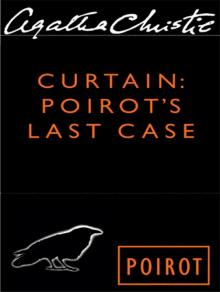 Curtain: Poirot's Last Case
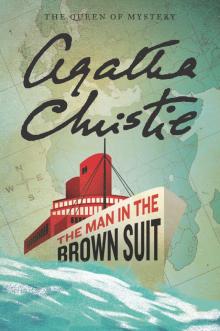 The Man in the Brown Suit
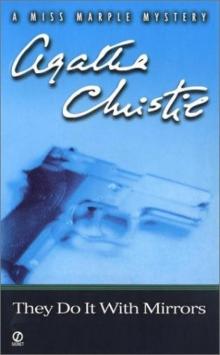 They Do It With Mirrors mm-6