
- Home
- Agatha Christie
Curtain hp-39 Page 12
Curtain hp-39 Read online
Page 12
Franklin and Judith came up from the garden about a quarter to one. Judith looked white and strained. She was very silent, looked vaguely about her as though lost in a dream, and then went away. Franklin sat down with us. He, too, looked tired and absorbed, and he had, too, the air of a man very much on edge.
I said, I remember, something about the rain being a relief, and he said quickly:
"Yes. There are times – when something's got to break -"
And somehow – I got the impression that it was not merely of the weather that he spoke. Awkward as always in his movements, he jerked against the table and upset half the chocolates. With his usual startled air, he apologized – apparently to the box:
"Oh, sorry."
It ought to have been funny, but somehow it wasn't. He bent quickly and picked up the spilt chocolates.
Norton asked him if he had had a tiring morning.
His smile flashed out then – eager, boyish, very much alive.
"No – no – just realized, suddenly, I've been on the wrong track. Much simpler process altogether is what's needed. Can take a short cut now."
He stood swaying slightly to and fro on his feet, his eyes absent yet resolved.
"Yes, short cut. Much the best way."
III
If we were all nervy and aimless in the morning, the afternoon was unexpectedly pleasant. The sun came out, the temperature was cool and fresh. Mrs Luttrell was brought down and sat on the verandah. She was in excellent form – exercising her charm and manner with less gush than usual, and with no latent hint of vinegar in reserve. She chaffed her husband, but gently and with a kind of affection, and he beamed at her. It was really delightful to see them on such good terms.
Poirot permitted himself to be wheeled out also, and he was in good spirits too. I think he liked seeing the Luttrells on such a friendly footing with each other. The Colonel was looking years younger. His manner seemed less vacillating, he tugged less at his moustache. He even suggested that there might be some bridge that evening.
"Daisy here misses her bridge."
"Indeed I do," said Mrs Luttrell.
Norton suggested it would be tiring for her.
"I'll play one rubber," said Mrs, Luttrell, and added with a twinkle: "And I'll behave myself and not bite poor George's head off."
"My dear," protested her husband, "I know I'm a shocking player."
"And what of that?" said Mrs Luttrell. "Doesn't it give me grand pleasure badgering and bullying you about it?"
It made us all laugh. Mrs Luttrell went on:
"Oh, I know my faults, but I'm not going to give them up at my time of life. George has just got to put up with me."
Colonel Luttrell looked at her quite fatuously.
I think it was seeing them both on such good terms that led to a discussion on marriage and divorce that took place later in the day.
Were men and women actually happier by reason of the greater facilities afforded for divorce, or was it often the case that a temporary period of irritation and estrangement – or trouble over a third person – gave way after a while to a resumption of affection and friendliness?
It is odd sometimes to see how much at variance people's ideas are with their own personal experiences.
My own marriage had been unbelievably happy and successful, and I am essentially an old-fashioned person, yet I was on the side of divorce – of cutting one's losses and starting afresh. Boyd Carrington, whose marriage had been unhappy, yet held for an indissoluble marriage bond. He had, he said, the utmost reverence for the institution of marriage. It was the foundation of the state.
Norton, with no ties and no personal angle, was of my way of thinking. Franklin, the modern scientific thinker, was, strangely enough, resolutely opposed to divorce. It offended, apparently, his ideal of clear-cut thinking and action. One assumed certain responsibilities. Those must be carried through and not shirked or set aside. A contract, he said, is a contract. One enters upon it of one's own free will, and must abide by it. Anything else resulted in what he called a mess. Loose ends, half-dissolved ties.
Leaning back in his chair, his long legs kicking vaguely at a table, he said:
"A man chooses his wife. She's his responsibility until she dies – or he does."
Norton said rather comically:
"And sometimes – oh, blessed death, eh?"
We laughed, and Boyd Carrington said:
"You needn't talk, my lad; you've never been married."
Shaking his head, Norton said:
"And now I've left it too late."
"Have you?" Boyd Carrington's glance was quizzical. "Sure of that?"
It was just at that moment that Elizabeth Cole joined us. She had been up with Mrs Franklin.
I wondered if it was my fancy, or did Boyd Carrington look meaningly from her to Norton, and was it possible that Norton blushed?
It put a new idea into my head and I looked searchingly at Elizabeth Cole. It was true that she was still a comparatively young woman. Moreover, she was quite a handsome one. In fact a very charming and sympathetic person who was capable of making any man happy. And she and Norton had spent a good deal of time together of late. In their hunts for wild flowers and birds, they had become friends; I remembered how she had spoken of Norton being such a kind person.
Well, if so, I was glad for her sake. Her starved and barren girlhood would not stand in the way of her ultimate happiness. The tragedy that had shattered her life would not have been enacted in vain. I thought, looking at her, that she certainly looked much happier and – yes, gayer, than when I had first come to Styles.
Elizabeth Cole and Norton – yes, it might be. And suddenly, from nowhere, a vague feeling of uneasiness and disquiet assailed me. It was not safe – it was not right – to plan happiness here. There was something malignant about the air of Styles. I felt it now – this minute. Felt suddenly old and tired – yes, and afraid.
A minute later the feeling had passed. Nobody had noticed it, I think, except Boyd Carrington. He said to me in an undertone a few minutes later:
"Anything the matter, Hastings?"
"No, why?"
"Well – you looked – I can't quite explain it."
"Just a feeling – apprehension."
"A premonition of evil?"
"Yes, if you like to put it that way. A feeling that – that something was going to happen."
"Funny. I've felt that once or twice. Any idea what?"
He was watching me narrowly.
I shook my head. For indeed I had had no definite apprehension of any particular thing. It had only been a wave of deep depression and fear.
Then Judith had come out of the house. She had come slowly, her head held high, her lips pressed together, her face grave and beautiful.
I thought how unlike she was to either me or Cinders. She looked like some young priestess. Norton felt something of that too. He said to her:
"You look like your namesake might have looked before she cut off the head of Holofernes."
Judith smiled and raised her eyebrows a little.
"I can't remember now why she wanted to."
"Oh, strictly on the highest moral grounds for the good of the community!"
The light banter in his tones annoyed Judith. She flushed and went past him to sit by Franklin. She said:
"Mrs Franklin is feeling much better. She wants us all to come up and have coffee with her this evening."
IV
Mrs Franklin was certainly a creature of moods I thought as we trooped upstairs after dinner. Having made everyone's life unbearable all day, she was now sweetness itself to everybody.
She was dressed in a negligee of pale eau-de-Nil and was lying on her chaise longue. Beside her was a small revolving bookcase-table with the coffee apparatus set out. Her fingers, deft and white, dealt with the ritual of coffee making with some slight aid from Nurse Craven. We were all there with the exception of Poirot, who always retired before dinner; Allerton,
who had not returned from Ipswich; and Mrs and Colonel Luttrell, who had remained downstairs.
The aroma of coffee came to our noses – a delicious smell. The coffee at Styles was an uninteresting muddy fluid, so we all looked forward to Mrs Franklin's brew with freshly ground berries.
Franklin sat on the other side of the table handing the cups as she filled them. Boyd Carrington stood by the foot of the sofa. Elizabeth Cole and Norton were by the window. Nurse Craven had retired to the background by the head of the bed. I was sitting in an armchair wrestling with the Times crossword and reading out the clues.
"Even love – or third party risk?" I read out. "Eight letters."
"Probably an anagram," said Franklin.
We thought for a minute. I went on:
"The chaps between the hills are unkind."
"Tormentor," said Boyd Carrington quickly.
"Quotation: 'And Echo whate'er is asked her answers -' blank. Tennyson. Five letters."
"Where," suggested Mrs Franklin. "Surely that's right. 'And Echo answers where'?"
I was doubtful.
"It would make a word end in 'w.'"
"Well, lots of words end in 'w.' How and now and snow."
Elizabeth Cole said from the window:
"The Tennyson quotation is: 'And Echo whate'er is asked her answers Death.'"
I heard a quick sharp intake of breath behind me. I looked up. It was Judith. She went past us to the window and out upon the balcony.
I said, as I wrote the last clue in: "Even love can't be an anagram. The second letter now is 'A.'"
"What's the clue again?"
"Even love or third party risk. Blank A and six blanks."
"Paramour," said Boyd Carrington.
I heard the teaspoon rattle on Barbara Franklin's saucer. I went on to the next clue.
"'Jealousy is a green-eyed monster,' this person said."
"Shakespeare," said Boyd Carrington.
"Was it Othello or Emilia?" said Mrs Franklin.
"All too long. The clue is only five letters."
"Iago."
"I'm sure it was Othello."
"It wasn't in Othello at all. Romeo said it to Juliet."
We all voiced our opinions. Suddenly from the balcony Judith cried out:
"Look, a shooting star. Oh, there's another."
Boyd Carrington said: "Where? We must wish." He went out on the balcony, joining Elizabeth Cole, Norton and Judith. Nurse Craven went out too. Franklin got up and joined them. They stood there exclaiming, gazing out into the night.
I remained with my head bent over the crossword. Why should I wish to see a falling star? I had nothing to wish for…
Suddenly Boyd Carrington wheeled back into the room.
"Barbara, you must come out."
Mrs Franklin said sharply:
"No, I can't. I'm too tired."
"Nonsense, Babs. You must come and wish!" He laughed. "Now don't protest. I'll carry you."
And suddenly stooping, he picked her up in his arms. She laughed and protested:
"Bill, put me down – don't be so silly,"
"Little girls have got to come and wish." He carried her through the window and set her down on the balcony.
I bent closer over the paper. For I was remembering… A clear tropical night – frogs croaking… and a shooting star. I was standing there by the window, and I had turned and picked up Cinders and carried her out in my arms to see the stars and wish…
The lines of the crossword ran and blurred before my eyes.
A figure detached itself from the balcony and came into the room – Judith.
Judith must never catch me with tears in my eyes. It would never do. Hastily I swung round the bookcase and pretended to be looking for a book. I remembered having seen an old edition of Shakespeare there. Yes, here it was. I looked through Othello.
"What are you doing, Father?"
I mumbled something about the clue, my fingers turning over the pages. Yes, it was Iago.
"O, beware, my lord, of jealousy;
It is the green-eyed monster which doth mock
The meat it feeds on."
Judith went on with some other lines:
"Not poppy, nor mandragora,
Nor all the drowsy syrups of the world,
Shall ever medicine thee to that sweet sleep
Which thou owedst yesterday."
Her voice rang out, beautiful and deep.
The others were coming back, laughing and talking. Mrs Franklin resumed her place on the chaise longue. Franklin came back to his seat and stirred his coffee. Norton and Elizabeth Cole finished drinking theirs and excused themselves, as they had promised to play bridge with the Luttrells.
Mrs Franklin drank her coffee and then demanded her "drops." Judith got them for her from the bathroom, as Nurse Craven had just gone out.
Franklin was wandering aimlessly round the room. He stumbled over a small table. His wife said sharply:
"Don't be so clumsy, John."
"Sorry, Barbara. I was thinking of something."
Mrs Franklin said rather affectedly:
"Such a great bear, aren't you, darling?"
He looked at her rather abstractedly. Then he said:
"Nice night; think I'll take a stroll."
He went out.
Mrs Franklin said:
"He is a genius, you know. You can tell it from his manner. I really do admire him terrifically. Such a passion for his work."
"Yes, yes, clever fellow." said Boyd Carrington – rather perfunctorily.
Judith left the room abruptly, nearly colliding with Nurse Craven in the doorway.
Boyd Carrington said:
"What about a game of picquet, Babs?"
"Oh, lovely. Can you get hold of some cards, Nurse?"
Nurse Craven went to get cards, and I wished Mrs Franklin good night and thanked her for the coffee.
Outside I overtook Franklin and Judith. They were standing looking out of the passage window. They were not speaking. Just standing side by side.
Franklin looked over his shoulder as I approached. He moved a step or two, hesitated and said:
"Coming out for a stroll, Judith?"
My daughter shook her head.
"Not tonight," She added abruptly, "I'm going to bed. Good night."
I went downstairs with Franklin. He was whistling softly to himself and smiling.
I remarked rather crossly, for I was feeling depressed myself:
"You seem pleased with yourself tonight."
He admitted it.
"Yes. I've done something that I've been meaning to do for a long time. Very satisfactory, that."
I parted from him downstairs and looked in on the bridge players for a minute. Norton winked at me when Mrs Luttrell wasn't looking. The rubber seemed to be progressing with unusual harmony.
Allerton had still not come back. It seemed to me that the house was happier and less oppressive without him.
I went up to Poirot's room. I found Judith sitting with him. She smiled at me when I came in and did not speak.
"She has forgiven you, mon ami," said Poirot – an outrageous remark.
"Really," I spluttered. "I hardly think -"
Judith got up. She put an arm round my neck and kissed me. She said:
"Poor Father. Uncle Hercule shall not attack your dignity. I am the one to be forgiven. So forgive me and say good night."
I don't quite know why, but I said:
"I'm sorry, Judith. I'm very sorry. I didn't mean -"
She stopped me.
"That's all right. Let's forget it. Everything's all right now." She smiled a slow far-away smile. She said again: "Everything's all right now…" and quietly left the room.
When she had gone, Poirot looked at me.
"Well," he demanded, "what has been happening this evening?"
I spread out my hands.
"Nothing has happened or is likely to happen," I told him.
Actually I w
as very wide of the mark. For something did happen that night. Mrs Franklin was taken violently ill. Two more doctors were sent for, but in vain. She died the following morning.
It was not until twenty-four hours later that we learned that her death was due to poisoning by physostigmine.
Chapter 14
I
The inquest took place two days later. It was the second time I had attended an inquest in this part of the world.
The coroner was an able middle-aged man with a shrewd glance and a dry manner of speech.
The medical evidence was taken first. It established the fact that death was the result of poisoning by physostigmine, and that other alkaloids of the Calabar bean were also present. The poison must have been taken sometime on the preceding evening between seven o'clock and midnight. The police surgeon and his colleague refused to be more precise.
The next witness was Dr Franklin. He created on the whole a good impression. His evidence was clear and simple. After his wife's death he had checked over his solutions in the laboratory. He had discovered that a certain bottle which should have contained a strong solution of alkaloids of the Calabar bean, with which he had been conducting experiments, had been filled up with ordinary water in which only a trace of the original contents was present. He could not say with certainty when this had been done, as he had not used that particular preparation for some days.
The question of access to the laboratory was then gone into. Dr Franklin agreed that the laboratory was usually kept locked and that he usually had the key in his pocket. His assistant, Miss Hastings, had a duplicate key. Anyone who wished to go into the studio had to get the key from her or from himself. His wife had borrowed it occasionally, when she had left things belonging to her in the laboratory. He himself had never brought a solution of physostigmine into the house or into his wife's room and he thought that by no possibility could she have taken it accidentally.
Questioned further by the coroner, he said that his wife had for some time been in a low and nervous state of health. There was no organic disease. She suffered from depression and from a rapid alternation of moods.
 Murder in the Mews
 Postern of Fate
 The Regatta Mystery and Other Stories
 Sad Cypress
 Why Didn't They Ask Evans?
 After the Funeral
 And Then There Were None
 The Witness for the Prosecution
 Murder on the Orient Express
 The Seven Dials Mystery
 Hercule Poirot: The Complete Short Stories
 The Mysterious Affair at Styles
 Sleeping Murder
 Hickory Dickory Dock
 The Moving Finger
 The Mirror Crack'd From Side to Side
 Ordeal by Innocence
 Mrs. McGinty's Dead
 Problem at Pollensa Bay and Other Stories
 Death Comes as the End
 Endless Night
 Parker Pyne Investigates
 Poirot's Early Cases: 18 Hercule Poirot Mysteries
 Murder Is Easy
 An Autobiography
 One, Two, Buckle My Shoe
 A Pocket Full of Rye
 The Mysterious Mr. Quin
 The Mystery of the Blue Train
 Hercule Poirot's Christmas: A Hercule Poirot Mystery
 Cards on the Table (SB)
 Three Act Tragedy
 The Secret Adversary
 The Body in the Library
 The Pale Horse
 While the Light Lasts
 The Golden Ball and Other Stories
 Double Sin and Other Stories
 The Secret of Chimneys
 Five Little Pigs
 Murder in Mesopotamia: A Hercule Poirot Mystery
 The Mousetrap and Other Plays
 Lord Edgware Dies
 The Hound of Death
 The Murder on the Links
 A Caribbean Mystery
 Peril at End House: A Hercule Poirot Mystery
 The Thirteen Problems
 By the Pricking of My Thumbs
 Mrs McGinty's Dead / the Labours of Hercules (Agatha Christie Collected Works)
 Appointment With Death
 Murder Is Announced
 The Big Four
 Three Blind Mice and Other Stories
 Hercule Poirot- the Complete Short Stories
 Passenger to Frankfurt
 They Do It With Mirrors
 Poirot Investigates
 The Coming of Mr. Quin: A Short Story
 4:50 From Paddington
 The Last Seance
 Dead Man's Folly
 The Adventure of the Christmas Pudding
 The A.B.C. Murders
 Death in the Clouds
 Towards Zero
 The Listerdale Mystery and Eleven Other Stories
 Hallowe'en Party
 Murder at the Vicarage
 Cards on the Table
 Death on the Nile
 Curtain
 Partners in Crime
 The Listerdale Mystery / the Clocks (Agatha Christie Collected Works)
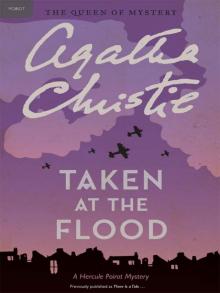 Taken at the Flood
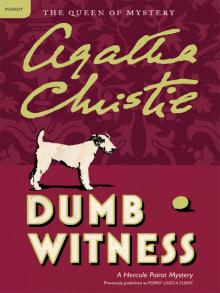 Dumb Witness
 The Complete Tommy and Tuppence
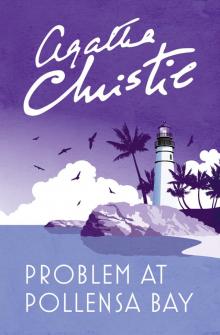 Problem at Pollensa Bay
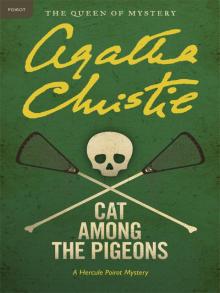 Cat Among the Pigeons
 At Bertram's Hotel
 Nemesis
 Miss Marple's Final Cases
 The Hollow
 Midwinter Murder
 They Came to Baghdad
 Third Girl
 Destination Unknown
 Hercule Poirot and the Greenshore Folly
 Postern of Fate tat-5
 Midsummer Mysteries
 Poirot's Early Cases hp-38
 Sparkling Cyanide
 Star over Bethlehem
 Black Coffee hp-7
 Hercule Poirot's Casebook (hercule poirot)
 Murder in Mesopotamia hp-14
 A Pocket Full of Rye: A Miss Marple Mystery (Miss Marple Mysteries)
 The Listerdale Mystery
 The Complete Tommy & Tuppence Collection
 Lord Edgware Dies hp-8
 Death in the Clouds hp-12
 Short Stories
 Third Girl hp-37
 Why Didn't They Ask Evans
 Adventure of the Christmas Pudding and other stories
 Cards on the Table hp-15
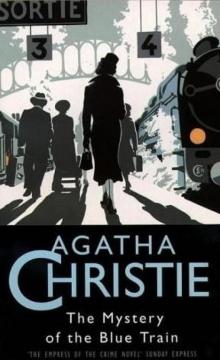 The Mystery of the Blue Train hp-6
 After the Funeral hp-29
 Poirot Investigates hp-3
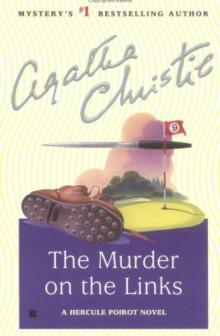 Murder on the Links hp-2
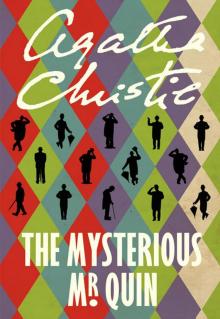 The Mysterious Mr Quin
 Curtain hp-39
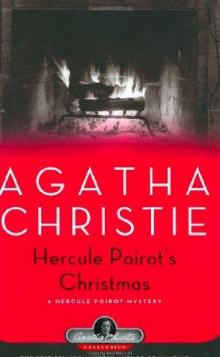 Hercule Poirot's Christmas hp-19
 Partners in Crime tat-2
 The Clocks hp-36
 Murder, She Said
 The Clocks
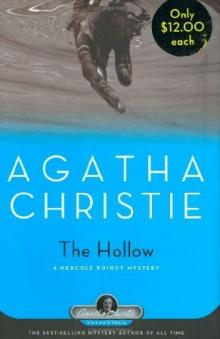 The Hollow hp-24
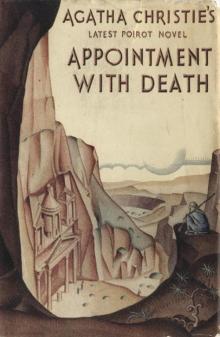 Appointment with Death hp-21
 Murder in the mews hp-18
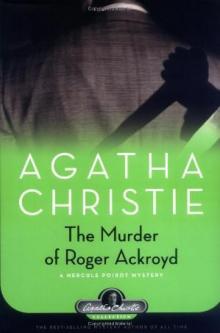 The Murder Of Roger Ackroyd hp-4
 Dumb Witness hp-16
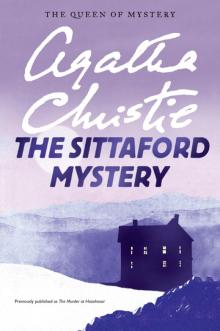 The Sittaford Mystery
 Mrs McGinty's Dead
 Evil Under the Sun
 The A.B.C. Murders hp-12
 The Murder at the Vicarage mm-1
 The Body in the Library mm-3
 Miss Marple and Mystery
 Sleeping Murder mm-14
 By the Pricking of My Thumbs tat-4
 A Pocket Full of Rye mm-7
 Hickory Dickory Dock: A Hercule Poirot Mystery
 The Big Four hp-5
 The Labours of Hercules hp-26
 The Complete Miss Marple Collection
 The Labours of Hercules
 4.50 From Paddington
 A Murder Is Announced mm-5
 Agahta Christie: An autobiography
 Hallowe'en Party hp-36
 Black Coffee
 The Mysterious Affair at Styles hp-1
 Three-Act Tragedy
 Best detective short stories
 Three Blind Mice
 Nemesis mm-11
 The Mirror Crack'd from Side to Side mm-8
 The ABC Murders
 Poirot's Early Cases
 The Unexpected Guest
 A Caribbean Mystery - Miss Marple 09
 The Murder of Roger Ackroyd
 Elephants Can Remember hp-39
 The Mirror Crack'd: from Side to Side
 Sad Cypress hp-21
 Peril at End House
 Elephants Can Remember
 Best detective stories of Agatha Christie
 Hercule Poirot's Christmas
 The Body In The Library - Miss Marple 02
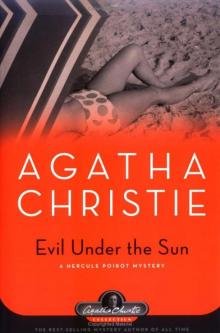 Evil Under the Sun hp-25
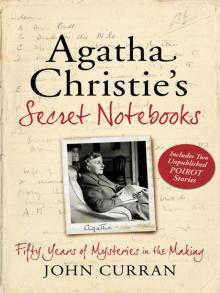 The Capture of Cerberus
 The Hound of Death and Other Stories
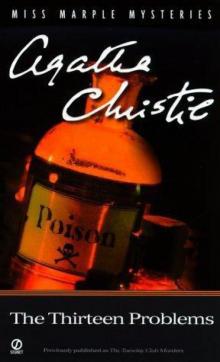 The Thirteen Problems (miss marple)
 The Thirteen Problems-The Tuesday Night Club
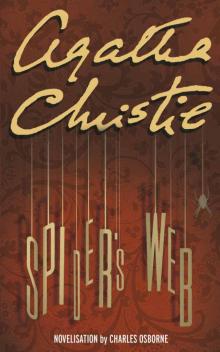 Spider's Web
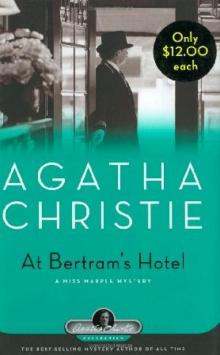 At Bertram's Hotel mm-12
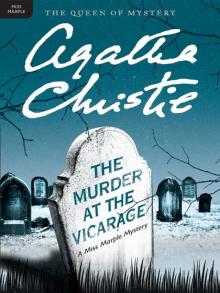 The Murder at the Vicarage (Agatha Christie Mysteries Collection)
 A Caribbean Mystery (miss marple)
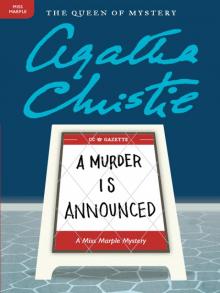 A Murder Is Announced
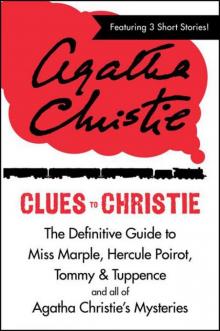 Clues to Christie
 The Moving Finger mm-3
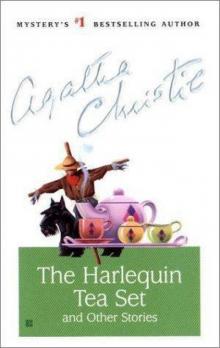 The Harlequin Tea Set and Other Stories
 Murder on the Links
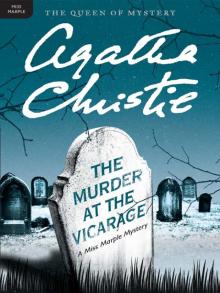 The Murder at the Vicarage
 N or M tat-3
 The Secret Adversary tat-1
 The Burden
 Mrs McGinty's Dead hp-28
 Dead Man's Folly hp-31
 Peril at End House hp-8
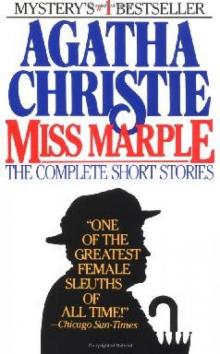 Complete Short Stories Of Miss Marple mm-16
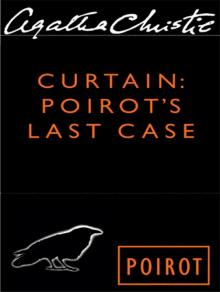 Curtain: Poirot's Last Case
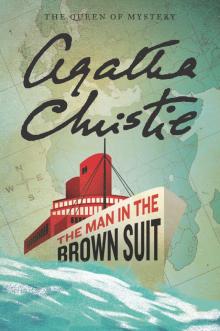 The Man in the Brown Suit
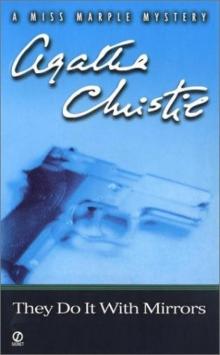 They Do It With Mirrors mm-6